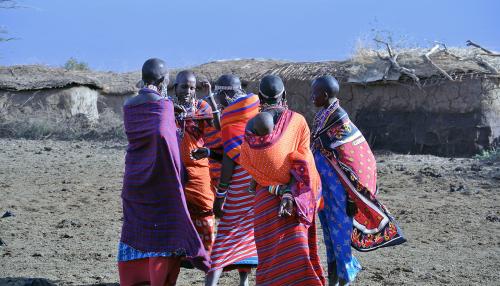
There are over forty distinct ethnic groups living in contemporary Kenya. Many are pastoralists who continue to define their identities by their relationship with the land, but who, like people everywhere, are finding it necessary to explore ways to adapt to new and changing environmental and social realities.
Photo by Preston Scott

While “recycling” is a fact of life throughout Kenya, contemporary artists at Kitengela located on the outskirts of Nairobi combine many materials and skills with robust imaginations to create living structures that are both functional and playfully beautiful.
Photo by Preston Scott
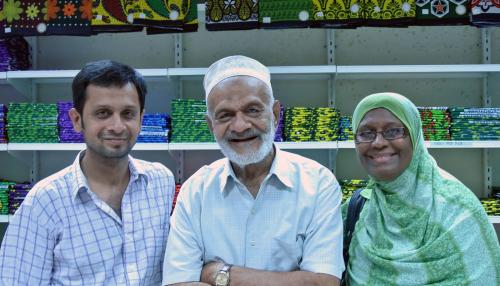
Colorful khanga (or kanga) cloth has been used for clothing and other household purposes throughout East Africa since the mid-nineteenth century. The Kaderdina family of Mombasa have been designing and selling khanga for more than one hundred years.
Photo by Preston Scott
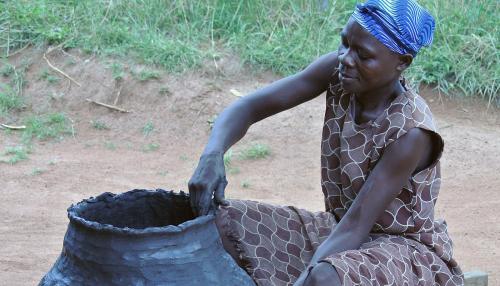
Pottery-making is an important craft in many Kenyan communities. Near Lake Victoria in western Kenya, large clay pots are shaped and fired for use as cisterns to collect and store rainwater needed during dry periods.
Photo by Preston Scott
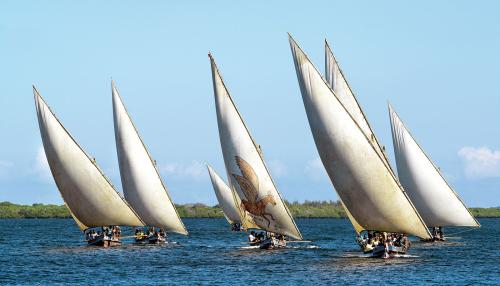
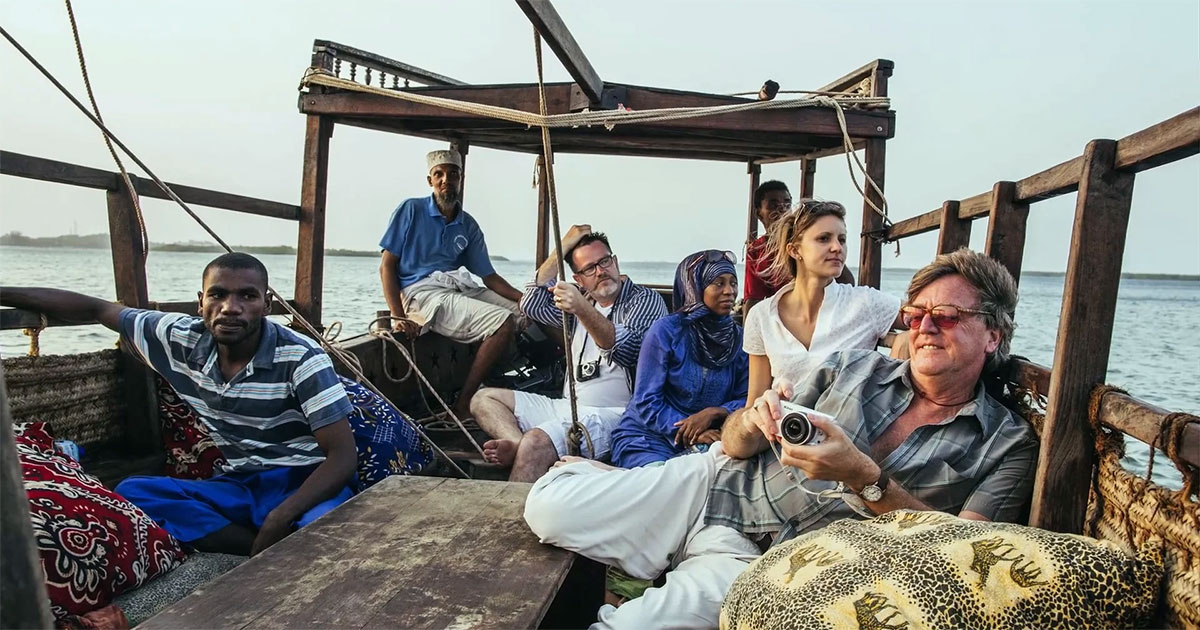
While jumbo jets, crowded superhighways, and the Internet now move people and ideas around Kenya at an unprecedented pace, the graceful dhow remains a key vehicle for livelihood and exchange between Kenya’s coastal communities and neighbors around the Indian Ocean.
Photo by David Coulson/TARA