
An unprecedented number of people—65.6 million people around the world today—have been forcibly displaced. This movement is often violent, uprooting communities and creating more than 22.5 million refugees. Survival is the singular focus for those displaced by genocide, war crimes, or other violence. Disconnected from the physical home, cultural contexts shift and rupture.
So what makes us who we are when we are no longer “home”?
The Armenia program partnered with On the Move—a series of Folklife Festival programs exploring how American culture has been shaped by the movement of people to and within the United States—and the American Anthropological Association to explore the role of cultural heritage during forced displacement, with a focus on the ways it builds resilience and ensures survival. The collaboration, Cultures of Survival, is a series of narrative sessions featuring Armenian participants and others with similar histories of forced displacement to share their stories and discuss how they’ve drawn on their heritage—specifically language, music, craft and food—not only to survive, but also to thrive in new communities.
The Cultures of Survival series was made possible with support from ANCA Endowment Fund #KeepThePromise and Aurora Humanitarian Initiative.


-
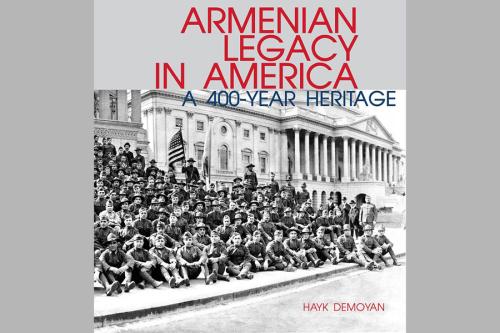 Armenians in America
The Armenian American Diaspora(s) are made up of several waves of migration. This session explored the legacy of Armenians in America and Armenian involvement in humanitarian efforts around the world today. Participants included historian and the author of Armenians in America: A 400-Year Heritage, Hayk Demoyan; Armenian American entrepreneur, philanthropist, and co-founder of Aurora Humanitarian Initiative Noubar Afeyan; and Chairman Emeritus and Board Director of the Near East Foundation Shant Mardirossian. This discussion was moderated by Jim Deutsch, curator, Smithsonian Center for Folklife and Cultural Heritage.
-
 Making Meaning: Economic and Healing Power of Craft
Survival is the singular focus for those displaced by genocide, war crimes, or other violence. Traditional craft is proven to play a role in healing trauma and also provides a livelihood that can provide financial security in unfamiliar environments. Syrian Armenian embroiderers Maral Sheuhmelian-Berberian and Ayda Sandourian discussed the role craft has played in their personal and family histories, from surviving genocide to leaving Aleppo and settling in Yerevan. This discussion was moderated by Adam Gamwell, podcast host/producer, This Anthro Life.
-
 Giving Voice: Language and Cultural Survival
How does language shape the sustainability of culture and identity in migrant communities? What are the pressures that threaten language sustainability when people are forced to leave their communities of origin? What are some strategies for preserving language?
-
This session explored these questions through conversation with Armenian program participants and representatives of the D.C.-based Mayan League, an organization working to sustain Mayan culture, communities, and lands. Participants included Syrian Armenian artisan Ayda Sandurian; Levon Avdoyan, an Armenia and Georgia area specialist at the Library of Congress; and Alejandro Santiago González (Maya Ixil) and Mercedes M. Say Chaclan (Maya K’iche’) of the Mayan League. The discussion was moderated by Mary S. Linn, curator of cultural and linguistic revitalization, Smithsonian Center for Folklife and Cultural Heritage.
-
 Sounding Memory: Music & Migration
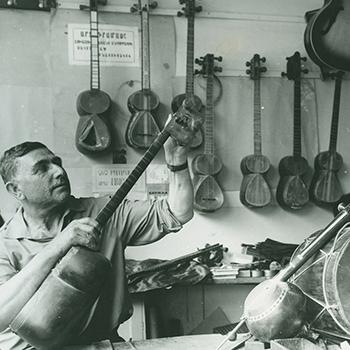
Music is one of the human expressions where rootedness and distant influences can be readily identified. Kumera Genet, D.C.-based musician, youth educator, and community organizer, led a conversation with Arto Tunçboyaciyan, a renowned composer, multi-instrumentalist, and leader of the Armenian Navy Band. Their discussion explored how heritage, migration, and exile shape creative practices, and the way Armenian musical traditions have influenced and been themselves transformed through transnational experiences.
-
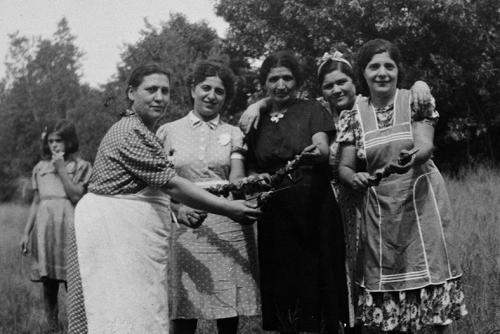 Tastes of Home: Food Enterprises
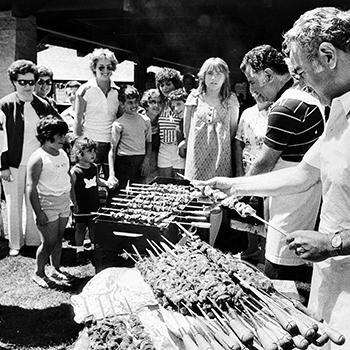
A source of sustenance and the centerpiece of social gatherings, food can function as a touchstone to heritage, a form of expression and communication, and as an avenue for improving livelihoods. Andy Shallal, D.C.-based artist, activist, and entrepreneur (owner of Busboys & Poets), led a conversation on this topic with Armenian and U.S.-based food entrepreneurs whose businesses have been shaped by contemporary migrations caused by conflict and war. Panelists included Andranig Kilislyan of Abu Hakob, a family-owned restaurant that moved from Aleppo to Yerevan in 2014; Noobtsaa Philip Vang, founder of D.C.-based Foodhini; and Liana Aghajanian, Detroit-based journalist and producer of the Dining in Diaspora blog.
RELATED EVENTS
-
May 14, 2018, 5–11 p.m.
Guest Chef: Syrian Armenian Cuisine

Syrian Armenian chef Andranig Kilislian joined the team at Maydān for a special one-evening event, preparing dishes—including lahmajun (“Armenian pizza”)—from Abu Hagop, his restaurant in Yerevan, Armenia.
-
June 23, 2 p.m.
The Stuff of Thought: A Gallery Talk on Arshile Gorky’s Khorkom

Born Vostanik Manoug Adoian in the village of Khokorm near Lake Van in the Ottoman Empire, Armenian American Arshile Gorky (c. 1902–1948) was one of the most influential painters of the twentieth century. The land of his birth—as well as the loss and suffering experienced in it—found its way into an extraordinary body of work. One such painting, Image in Khokorm, is now view in at the Kreeger Museum. Visitors joined us for a spirited talk on the piece and what it says about place, longing, and creativity, led by museum docent Irene Abrahamian. The afternoon included music from Levon Mikaelian and light refreshments.
-
June 29, 2018, 7 p.m.
Storytelling: History, Healing and Hope

Films presented by ANCA Endowment Fund #KeepThePromise
The Promise is an Armenian Genocide-era epic of love and survival by Academy Award-winning Director Terry George, starring Oscar Isaac, Charlotte Le Bon, and Academy Award-winner Christian Bale.
July 5, 2018, 6:30 p.m.
In Intent to Destroy: Death, Denial and Depiction, filmmaker Joe Berlinger meets with historians and scholars to discuss the Armenian Genocide and its denial, set during the filming The Promise.
-
July 3, 2018, noon
Ara and Onnik Dinkjian with the New York Gypsy All Stars

Onnik Dinkjian, at eighty-eight years old, remains America’s most renowned Armenian folk and liturgical singer. He has preserved Armenian folk songs from the villages of Anatolia in eastern Turkey, especially in the unique dialect from his ancestral city of Diyarbekir. Onnik was joined by an ensemble that included his son Ara, a highly accomplished oud player. Presented in partnership with the American Folklife Center.