
 Catalina Alvarado-Cañuta
 Angelo Baca
 Johnson Cerda
 Brenda Child
 Patrick Austin Freeland
 Kelly Fivekiller Hallman
 Francisco Huichaqueo
 Kayla Jackson (GALACTIC)
 Jacinte Lambert
 Debbie Lavallee
 Oren Lyons
 Rex Lyons
 Harvey & Gina Posey Pratt
 Brett Ramey
 Angela Riley
 Nonabah Sam (GALACTIC)
 Sean Sherman
 Gabrielle Tayac
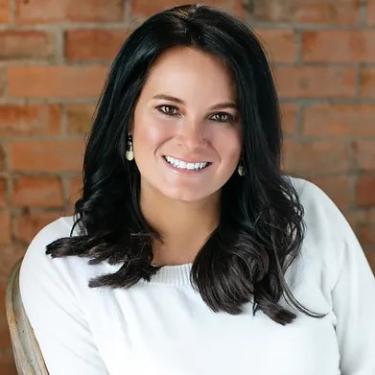 Heather Dawn Thompson
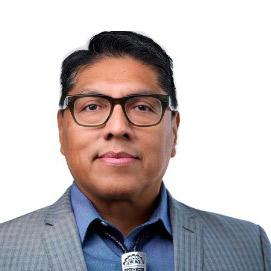 Brian Vallo
 Daniel Wildcat
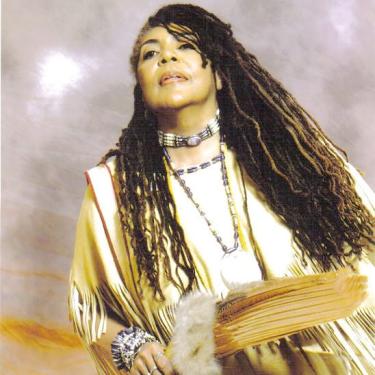 Penny Gamble-Williams & W. Thunder Williams
- Lauren Good DayDallin Maybee
- Chris PappanGreg Smith
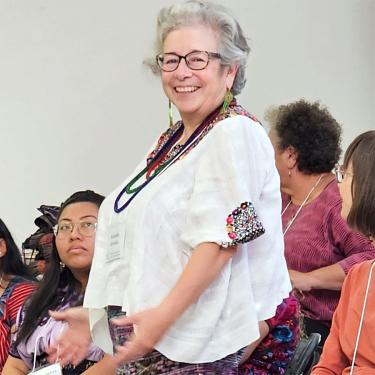 Yolanda Alcorta
 Betto Arcos
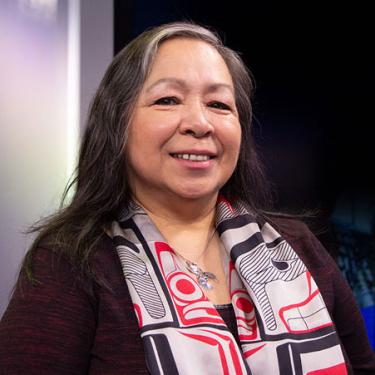 Elaine Bomberry
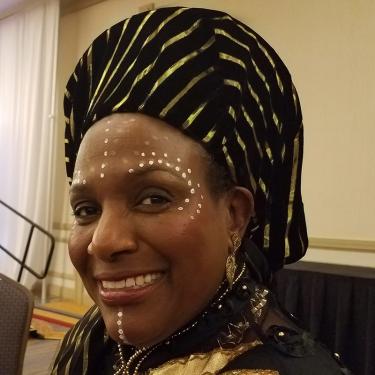 Camila Bryce-Laporte
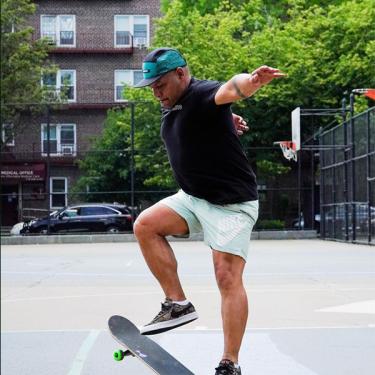 Bert Correa
 Fernando Gumeta-Gómez
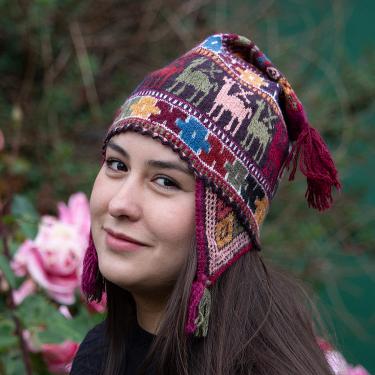 Diana Hendrickson
 Gustavo Hinojosa Arango
 Halena Kapuni-Reynolds
 Demián Ortiz Maciel
 Marcia Ostashewski
 Christine Panther
 Miss Chief Rocka
 Emily Uruchima
- Grô MirawêAmanda Villa Pereira
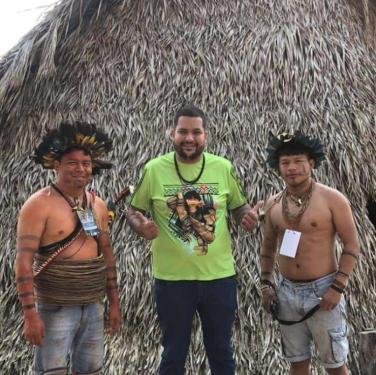 Associação do Povo Indígena Amondawa
Artists from the Amondawa community use songs, stories, and personal adornment to sustain their traditions and share their contemporary struggle to remain on and protect the Uru-Eu-Wau-Wau Indigenous Land in the rainforest region of Rondônia State, Brazil. Their music, with hand-carved flutes and symbolic lyrics, documents these conflicts and calls for spiritual protection, peace, and well-being for their people. As part of the Associação do Povo Indígena Amondawa, they work to educate others about the environmental knowledge and social contributions of Indigenous people, with support from the Inter-American Foundation.
Tambura Amondawa, artist
Wauto Am Oro Waram, artist
Amanda Villa Pereira, presenter
 Bird Singers of the Agua Caliente Band of Cahuilla Indians
The bird singers steward a repertoire of hundreds of songs in the Cahuilla language that recall the history of the people and their migration. Agua Caliente bird singers have revitalized this ancestral tradition with its songs, rattles, and dances, and today the tribe hosts Singing the Birds, an intertribal gathering that celebrates bird singing from many Southern California Native communities.
John Preckwinkle III, lead singer
Elias Adair
Isabella Dodd
Shalina Elizondo
Marina Elizondo-Bentiste
Dakota Galindo
Jimmy Gilmore (Soboba Band of Luiseño Indians)
Jorge Hernandez
Diego Jaime
Makala L. Pete
Anthony Purnel
Savana Saubel
Jacinda S. Townsend
 Sara Curruchich
As an author, composer, and performer, Sara Curruchich finds inspiration in her Maya culture, composing in her native language, Kaqchikel, and in Spanish. She is one of the first Maya artists to perform in Kaqchikel on the world stage. Her band, which includes the signature Guatemalan instrument, marimba, subtly mixes folk, rock sounds, and Indigenous Mayan influences. Through her songs, she weaves stories of resistance and love, carrying a message that transcends borders and resonates with the diversity of human experiences.
Sandra Moreno, marimba
Moty, percussion
Karla Molkovich, bass
 DinéTah Navajo Cultural Program
The DinéTah dancers present traditional dances that are linked with seasonal and ceremonial life, as well as dances that honor veterans and those who tell stories, performed in Diné bizaad, or Navajo language. DinéTah was founded in 1993 by Shawn Price, a historian and knowledge keeper, to promote the practice and understanding of Navajo cultural heritage. The intergenerational group performs frequently around the American Southwest and across the country. With traditional and modified songs and dances, DinéTah performances are an expression of enduring Diné values. The name DinéTah, meaning "among the people," is the name for the Navajo homeland in the Four Corners region.
Shawn Price, director
Tavish Brown, assistant director
Rob Felson, manager
Brandon Livingston
Jade Largo
Vera Brown
Azalea Cayaditto
Karolina Chapo
Shanell Benally
Devin Warner
 Wade Fernandez / Apīs-Mahwaew
Wade Fernandez is a multi-award-winning touring musician and arts educator from the Menominee Nation, Wisconsin. Wide ranging in style, his music is grounded in his Menominee Reservation roots, people, and love for Grandmother Earth. A composer, guitarist, singer, and traditional flute player, Fernandez has played prominent stages around the world and also teaches in workshops, schools, and artist residencies.
Wade Fernandez, vocals, guitar
Quintin Fernandez, drums
 The Gaudry Boys
The Gaudry Boys come from St. Laurent, Manitoba, Canada. Brothers Dylan, Zachary, and Ryan Gaudry have been playing music together for twenty years. Accompanying them on lead guitar is friend Kevin Cockle from Winnipeg, Manitoba. Their Métis traditional fiddle music will get you off your chair, toe tapping, an even dancing.
Kevin Cockle, guitar
Dylan Gaudry (St. Laurent, Métis Citizen), fiddle
Ryan Gaudry (St. Laurent, Métis Citizen), drums
Zachary Gaudry (St. Laurent, Métis Citizen), bass
 Git Hoan Dancers
The Git Hoan Dancers (People of the Salmon) bring Tsimshian dance to the world, sharing songs, dances, and oral traditions and using a wide variety of articulated masks and musical instruments that are distinctive of their home community in Metlakatla, Alaska.
Founder David Boxley is an internationally recognized wood carver and cultural leader, frequently collaborating with his son David R. Boxley on public art commissions, including the totem pole in the National Museum of the American Indian's Potomac Atrium. Based in Seattle and Metlakatla, the Boxley family and the Git Hoan dancers have been instrumental in the revitalization of Tsimshian arts and culture, integral parts of Tsimshian life that were once forbidden. Git Hoan performances unite many forms of artistry in handmade regalia, wooden masks, painted drums and rattles, and dramatic storytelling dances.
David A. Boxley (Tsimshian)
David Robert Boxley (Ts'msyen)
Michelle Boxley (Tsimshian/Haida/Tlingit)
Alicia Bybee (Tsimshian/Haida/Tlingit/Sisseton Wahpeton Oyate)
Cedar Gallenbach (Tsimshian/Haida/Tlingit/Sisseton Wahpeton Oyate)
Jayden Gallenbach
Joseph Gallenbach
Arlie Espinosa
Brea James (Nisga'a Nation/Haíɫzaqv Nation)
Leila James (Tsimshian/Tlingit/Haida/Nisga'a/Haíɫzaqv)
Nicholas James, Jr. (Tsimshian/Tlingit/Haida/Nisga'a/Haíɫzaqv)
Nick James (Haíɫzaqv Nation/Nisga'a Nation/Tlingit/Haida)
Jerome A. Nathan (Tsimshian/Haida)
Christy Sanidad
Darius Sanidad (Tsimshian/Haida/Tlingit)
Dylan Sanidad (Tsimshian/Haida/Tlingit)
Sage Sanidad (Tsimshian/Haida/Tlingit)
Santana Sanidad (Tsimshian/Haida/Tlingit)
Shiloh Sanidad (Tsimshian/Haida/Tlingit)
Jeremiah Yong-Nathan (Tsimshian/Haida)
 Hālau o Kekuhi
Founded in 1973, Hālau o Kekuhi is a matrilineal organization led today by Kumu Hula Nālani Kanakaʻole followed by Huihui Kanahele-Mossman. The esteemed hālau hula (classical dance school) is part of the Edith Kanakaʻole Foundation, which is dedicated to the elevation of Native Hawaiian knowledge and practice. Their presentation of hula exemplifies the integrity of Hawaiian cultural traditions, as hula requires knowledge of Hawaiian language, genealogy and history, environmental knowledge and protocol related to the collection of plants, and expertise in philosophy and spirituality.
Huihui Kanahele-Mossman, Kumu hula
Nalani Kanakaole, Kumu hula
Natsumi Barcelona
Kekuhi Haililani Kanahele
Lanihuli Kanahele
Kaua Kanakaʻole-Ioane
Namelemanukukalaao Kapono
Māhealani Lono
Kala Mossman
Kihaapiʻilani Stevens
Kainoa Thornton
Nanea Villanueva
Sig Zane
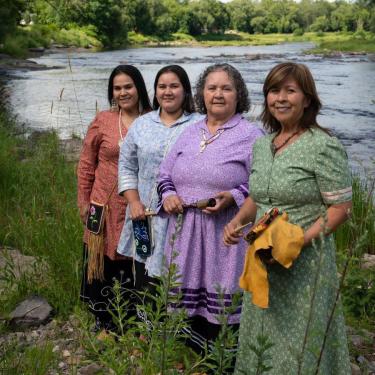 Kontiwennenha:Wi
Kontiwennenha:Wi means "Carriers of the Words," evoking these musicians' purpose of keeping the Mohawk language alive in song in order to encourage its continued use. Formed in 1996, this community-based women's singing group from the Mohawk Nation at Akwesasne, New York performs original compositions by Theresa Bear Fox in Kanien'kéha (Mohawk language) and English. Kontiwennenha:Wi creates new verses for the New Women's Dance (Esgánye), shared in the spring and fall at community sings hosted around the six nations of the Haudenosaunee. The group includes women and girls, mothers and daughters, aunts and nieces of multiple generations.
Theresa Bear Fox, composer, singer
Raiwate Cook, dancer
Elizabeth Nanticoke, singer
Iawentas Nanticoke, singer
 Marimba Maya AWAL
Grupo AWAL is a folklore dance and music group that originated from the Quetzaltenango department of Concepción Chiquirichapa in Guatemala. Established by Julia Sanchez and Luisa Lopez in 2005, the group strives to spread their knowledge of Maya culture through stories, dances, traditional outfits, customs, and marimba music. They have maintained their ancestral roots by practicing and speaking the Maya Mam language, one of twenty-one Indigenous languages in Guatemala. The name AWAL comes from Maya Mam, meaning El Sembrador or The Sower, and their objective is to value and sow the culture that their children and young will one day learn and participate in.
Kevin Cabrera
Victoria Cabrera
Jesus Dias
Gonzalo Dias
Carlos Mendez
Federico Mendez
Marvin Miranda
Ubaldo Sanchez
 Nadia Larcher
Hailing from the great Argentine north, musician Nadia Larcher delves into her Andean roots to honor her Daiguita Calchaquí lineage and celebrates the music of her home. Her current project, Tinya Raiz, brings together diverse rhythms that celebrate the musical memory of the Andes. Musical genres she explores include huaynos, carnavalitos, pin pin, caporales, vidalas, and coplas.
Nadia Larcher, vocals, percussion
Pablo Marti Gonzalez, percussion
Manu Sija, string instruments
 MISK'I & K'achamosita
MIS'KI Estefanny Morales is a hip-hop artist and musician born in 1998 in Cochabamba, Bolivia, with roots in La Paz. Since childhood, music and drawing have been part of her life, and she learned about Bolivia's rich folk music traditions as her family moved around the country for her mother's work as a rural teacher. As she got older, she was influenced by other music and discovered hip-hop and urban music as a space of emotional learning. In 2017, she became a skateboarder (she also represents Imilla Skate at the Festival), and in 2023, she started her professional music career with the support of other local Cochabamba urban music producers. Music has become a medium for her to express personal emotions and a space to address social issues. Currently, she is part of a music collective called Bandidas Subversivas (Subversive Bandits) alongside singer-songwriters Kanto Tika Nina and Lu Ávila.
Susan Maria Paola Meza, aka K'achamosita, was born in Cochabamba, Bolivia. Music has been part of her family's endeavors since she was a child. During her elementary school years, she learned how to play the piano, sing, and play other traditional instruments. Although she never learned to read notation, she believes that this influenced the aesthetics of her music. Music is an art form that allows her to express creativity and reconstruct identities. In her music, she explores the fusions between traditional Bolivian music, rap, and rock. Meza is also a skateboarder with Imilla Skate, and she understands that her two arts work in tandem and inform each other.
 Doc Native and Spencer Battiest
Brothers Doc Native and Spencer Battiest (Seminole Tribe of Florida) are performing artists whose distinct trajectories and musical collaborations elevate Native stories and key issues. In 2017, Doc Native and Battiest released the politically charged collaboration with Taboo, "Stand Up/Stand N Rock #NoDAPL," which was honored with a Video Music Award. Raised in Choctaw and Seminole communities of musicians and gospel singers, Native is a songwriter, producer, and actor, and Battiest is a singer/songwriter who also works in musical theater.
Spencer Battiest
Doc Native
Matt Beach
Kevin Philips
Justin Michael Abraham
 Native Pride Dancers
The Native Pride Dancers bring the excitement and artistry of Native American powwow dances to audiences around the world. An intertribal artistic and educational troupe, its members are citizens of many tribal nations including Chickasaw, Choctaw, Dakota, Meskwaki, Navajo, Ojibwe, and Pueblo. In performances and workshops, the Native Pride dancers demonstrate the innovative blending of traditional steps and contemporary expression that is a hallmark of powwow dance, and they share the meanings and cultural history of their vibrant traditions.
Native Pride is directed by Larry Yazzie (Meskwaki), a world champion fancy dancer and noted cultural educator based in Jacksonville, Florida.
Angelo Begay (Navajo), singer, chicken dancer
T'ata Begay (Choctaw/Taos Pueblo), women's fancy shawl dancer
Tanapo Hoyo Begay (Navajo/Choctaw/Taos Pueblo), tiny tot fancy war dancer
Okhish Homma Begay (Navajo/Choctaw/Taos Pueblo), tiny tot fancy war dancer
Aubrey Roberts (Meskwaki), women's jingle dancer
MorningStar Roberts (Choctaw/Taos Pueblo), women's fancy war and shawl dancer
Paan Pai Roberts (Choctaw/Taos Pueblo), women's southern cloth dancer
Rebecca Roberts (Taos Pueblo), lead dancer, women's jingle dancer
Ryan Roberts (Meskwaki), women's jingle dress
Tia Alexis Roberts (Narragansett), women's fancy shawl dancer
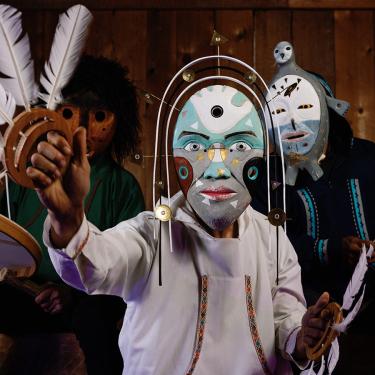 Nuna Dancers
Nuna is a deeply rooted traditional dance collective that weaves together a rich expression of Indigenous cultures from the Yup'ik, Siberian Yupik, Iñupiaq, and Tlingit Nations of Alaska. For over two decades, these talented performers have shared their passion and cultural knowledge to keep traditions thriving through powerful presentations of song and dance practices. Their multicultural backgrounds infuse their performances with a unique energy that celebrates the enduring spirit of Arctic Alaska.
Lori Cottee (Yup'ik)
Jenny Cuevas (Iñupiaq)
Peter Pilak Griggs (Yup'ik/Sugpiaq)
Marie Meade (Yup'ik)
Naaqtuuq Robertson (Iñupiaq)
Colette Topkok (Native Village of Teller)
Nae Tumulak (Tlingit)
London Walker
Yaari Walker (St. Lawrence Island Yupik)
Kelsey Ciugun Wallace (Yup'ik)
 Pamyua
Pamyua showcases Inuit culture though music and dance performance. Formed in 1995 by brothers Phillip and Stephen Blanchett, their music blends Inuit drum/dance melodies with R&B vocal styling and arrangements, often described as "Inuit Soul Music." The group works with world-class musicians from Alaska to Denmark and travels the world sharing their blend of cultural harmony. Pamyua's performances aim to honor and share Indigenous traditions through ceremony, songs, and dance. In addition to their feature concert performance, members of Pamyua will be facilitating workshops on Arctic games and Arctic dance at the Festival.
Phillip Blanchett (Yup'ik)
Tun'aqi Blanchett (Yup'ik)
Chantil Dukart (Tsimshian/Sugpiaq)
Ivan Knight
Ossie Kairaiuak (Yup'ik)
Qacung (Yup'ik)
 Pasatono Orquesta
Pasatono Orquesta has focused its interest and dedication to research, perform, compose, and promote the musical Mixtec culture. After a long journey of many years of exploration throughout the states of Guerrero, Puebla, and Oaxaca, plus the transnational community, Pasatono has been nourished by the guardians of the cloud people's music "living treasures": luthiers, bass players, banjo players, violinists, composers, among others who possess a great knowledge of their musical culture.
Rubén Luengas Pérez (Mixteco), artistic director and conductor, bajoquinto
Verónica Acevedo Escamilla (Oaxaqueña), violin
Froylan Bautista Gabriel (Zapoteco), baritone and trombone
Emmanuel Bautista Gonzalez (Oaxaqueño), trumpet
Patricia García López (Oaxaqueña), violin
Pablo Márquez (Oaxaqueño), percussion
Edgar Serralde Mayer (Oaxaqueño), jarana and vocals
Rodrigo Pereyra Cruz (Oaxaqueño), violin and vocals
René González Santillán (Triqui), clarinet and saxophone
PabloMaya Ortega (Mexicano), manager
 Murray Porter and Elaine Bomberry
Murray Porter (Mohawk, Six Nations of the Grand River Territory, Ontario) is a Juno Award-winning, self-taught blues musician who has developed a unique songwriting style reflecting Indigenous experience and storytelling. Elaine Bomberry (Cayuga/Anishinaabe), also a songwriter, is a trailblazer in the music industry, an award-winning broadcast producer, and an advocate for Indigenous performing artists.
They are creators of the "Rez Bluez" series, which since 1993 has presented concerts, radio reportage, workshops, and television programs. They make their home on the Capilano Reserve on the unceded Squamish Nation territory in North Vancouver, British Columbia.
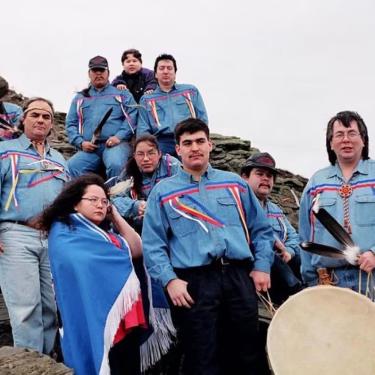 Sons of Membertou
The Sons of Membertou are a traditional group that performs Mi'kmaw music and channels the spirit of the powwow by celebrating life, rejuvenating the spirit, and by dancing and praying with the ancestors. The group began in 1993, when elders gave a drum to Darrell and Sharon Bernard, asking them to return it to their community. With the guidance of numerous elders, they recorded some of George Paul's songs. This culminated in their first album, Wapna'kik, "The People of the Dawn," which combines traditional drums with the contemporary sounds of some of Cape Breton's finest musicians.
As Smithsonian Folkways Recordings artists, Sons of Membertou performs throughout Canada and Europe, preserving their culture and language by sharing their music with young people and recruiting new members.
Darrell Bernard
Austin Christmas
J.R. Isadore
Boyd McEwan
John McEwan
Graham Marshall
David Meuse
George Paul
Daniel Akira Stadnicki
Liam Stapleton
 Waikil and Ketrafe
Jaime Cuyanao Venegas, who goes by Waikil, is a Mapuche rapper, musician, and singer-songwriter. He creates a musical blend that fuses rap in both Spanish and Mapuzungun. Through his music, he narrates the experiences of his people, capturing both the everyday life in rural areas and the urban Mapuche lifestyle. In 2005, he co-founded the musical group Wechekeche ñi Trawün with other young Mapuche artists, and they have recorded and released eight albums together. In 2015, he began his solo career, touring around Europe and the Americas. In 2023, to honor the music and legacy of Victor Jara on the fiftieth anniversary of the military coup in Chile, he released the live session "Ngoymakelaiñ / We Do Not Forget" in collaboration with singer-songwriter and musician Ketrafe. This project includes audiovisuals and original music available on YouTube.
A Mapuche-Warriache singer-songwriter from Nueva Imperial, Wallmapu, Ketrafe creates and performs songs inspired by his experiences as a Mapuche in his homeland and the Futa Waria (Santiago). He reclaims his culture, knowledge, and language through his music by incorporating Mapuzungun into his songs. In 2020, he released his debut album, Nepey tañi üñüm piwke, which was nominated for the Pulsar Awards the following year in the Indigenous Peoples category. His music is a significant part of the contemporary Mapuche musical soundscape, establishing itself in the genre of trova. Ketrafe creates, performs, and reinterprets part of the popular repertoire of Mapuche music and its rich diversity. In parallel, he actively participates in the musical band Waikil + Banda Rap Mapuche as a guitarist and collaborator.
 Zuni Olla Maidens
The performances of the Zuni Olla Maidens celebrate the roles of women in Zuni communities as strong role models balancing traditional and contemporary life, with the olla (decorated water jar) as a central symbol of the life-giving work of their foremothers. The group was founded in the 1920s by ceramicist Daisy Hooee Nampeyo to highlight the revival of Zuni pottery making, traditionally a women's art form.
Over the decades, the group has sustained a wide repertoire of dances and songs in Shiwiʼma,or Zuni language, including their own compositions, traditional social dances, and their iconic dance with ceramic ollas balanced on their heads. The current artists of the Zuni Olla Maidens are members of the same extended family that has led the group since the 1940s.
Juanita Edaakie, leader
Loretta Beyuka
Kourtney Bobelu
Lynisha Dishta
Corliss Edaakie-Bobelu
LaShea Harris
Ashleigh Yamutewa
 Abel Aguilar Vásquez
Abel Aguilar Vásquez is an artisan from the San José Zaachila community of Oaxaca, Mexico, who works in plaster relief. Following a childhood in Mexico and time spent in the United States, Aguilar Vásquez returned to his home region to study Mexican history, working as a tour guide and developing his interest in Zapotec history and culture at the renowned Monte Albán Archeological Zone. He started the Garuld workshop with the mission to recover and share Zapotec teachings with his community through art education with the involvement of his spouse, Blanca Garcia Gutierrez, and family. Garuld is the art of completing oneself and seeking balance, and Aguilar's work seeks to translate that idea through sculptural craft.
 Kevin Aspaas
Kevin Aspaas is a Diné pastoralist and weaver based in Shiprock, New Mexico, in the Navajo Nation. He learned to weave from his mother, who learned from her sister and mother. Aspaas's work embodies a close connection with the land and the seasons in the Diné homeland and the pastoral, sheep-raising traditions. Working with natural dyes and wool from his flock, he creates contemporary textile art as well as traditional dresses, sash belts, and moccasins that are worn by members of his community.
From the Festival Blog: "Sitting at the Loom Is a Prayer": Kevin Aspaas Weaves Diné History and Culture
 Centro de Textiles Tradicionales del Cusco
Textile artist Nilda Callañaupa Alvarez (Quechua) created the Centro de Textiles Tradicionales del Cusco (CTTC) in Peru to support weavers in the region by exchanging techniques and improving their market opportunities. The organization grew out of grassroots gatherings of textile artists seeking to recover knowledge from elder weavers and to promote pride in Indigenous identities and traditions. Q'aytu awaspa, or weaving threads, has flourished as a communicative and functional medium in the Andes for centuries.
Working with artisans and youth from ten communities, each with unique ancestral styles, weavers of the CTTC ensure that there is a future for these textile traditions. The organization has worked with international partners, including the Inter-American Foundation, to support its vital work.
Maria Layme, weaver
Marina Maza, weaver
Eva Molina, weaver
Martha Quispe, weaver
Diana Hendrickson, board memberFrom Folklife Magazine: The Guiding Thread: Women Weave Legacies in the Peruvian Andes
 Cornelio V. Campos
Cornelio V. Campos is a self-taught painter whose visual storytelling lifts up the experiences of immigrants and explores his own Indigenous Purépecha roots. Campos immigrated to the United States from Michoacan, Mexico, as a young man, eventually settling in North Carolina, where he was a farm worker and laborer for several years before returning to art making. This journey influenced his art and advocacy for the community of immigrants.
Campos has developed his own style, drawing on the heritage of Mexican American muralism, the imagery and stories drawn from the cultural traditions of his upbringing, and the dynamic community of immigrants in Durham.
Campos is assisted by Emily Pahuamba (Purépecha).
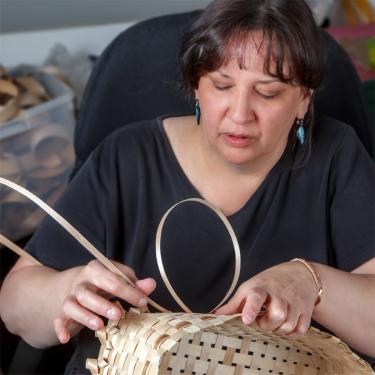 Kelly Church
Ottawa and Potawatomi artist and culture keeper Kelly Church creates black ash baskets that combine the traditions of yesterday and today. A member of the Match-E-Be-Nash-She-Wish Band of Pottawatomi Indians of Michigan, and a Grand Traverse Band of Ottawa and Ojibwe descendent, Church is part of the largest black ash weaving family in the Great Lakes region, and she continues a long lineage of black ash basket weavers. Church learned basket weaving from her father and other relatives, and she learned the Odawa language from her paternal grandmother growing up in southwest Michigan.
She is an advocate for the black ash tree and for the survival of Indigenous traditions. As an educator, she raises awareness about the emerald ash borer, an invasive species that threatens ash trees, and teaches harvesting and weaving techniques.
At the Festival, she is supported by her husband Jeff Strand.
 Darden Family
John Paul Darden, Scarlette Darden, and Melissa Darden (Chitimacha) are among the few weavers who carry the ancestral Chitimacha tradition of split-cane basketry today. John Paul has worked with tribal members and government agencies to restore the habitat of the river cane plant around their tribal lands in Charenton, Louisiana. As descendants of noted weavers Lydia Darden, Clara Darden, and Ernestine Wells, all three are passing this knowledge onto their children and grandchildren.
 Ronni-Leigh Goeman
Award-winning Onondaga artist Ronni-Leigh Goeman has been weaving baskets since she was a teenager, under the mentorship of Akwesasne Mohawk weaver Mae Big Tree. Based in the Onondaga Nation in upstate New York, she often collaborates with her husband, sculptor Stonehorse Ione Goeman. Ronni-Leigh is a leader in raising awareness of the threatened black ash tree and its irreplaceable cultural significance to Haudenosaunee communities, with black ash baskets being fundamental in daily traditions and important celebrations. Her black ash and sweetgrass baskets tell the story of the Haudenosaunee people's resilience and strength.
 Reyna Hernandez
Reyna Hernandez (Ihaŋktoŋwaŋ) explores the complexity of identity, place, and hybridity through her large-scale public artworks. With the community art group Mural On the Wall, Hernandez and mural partner Amber Hansen, sister Sonia Hernandez, and other artists create murals that spark dialogue in rural towns in South Dakota and across the Plains. Working in community, they empower people of all ages through creative expression and inscribe an Indigenous presence in public spaces.
 Wooshkindein Da.Áat Lily Hope
Wooshkindein Da.Áat Lily Hope is a Tlingit artist, born into the Raven moiety and the T'akdeintaan clan. She learned Ravenstail and Chilkat weaving techniques, considered some of the most complex textile techniques in the world, from her mother, the late Clarissa Rizal, as well as Kay Parker. Hope is one of the few active designers of dancing blankets, or naaxiin, an indispensable part of traditional regalia used at potlatches and other ceremonies, and part of the cultural wealth of Tlingit, Tsimshian, and Haida peoples.
Based in Juneau, Alaska, Hope is sought after as a teacher, facilitator, and mentor, who often engages in collaborative and community-based art making. She practices and teaches weaving as both a spiritual and an artistic endeavor. Hope is also an accomplished Tlingit storyteller. At the Festival she is supported by Edward Jones.
From Folklife Magazine: The Spirit Lives On in Art: Lily Hope's "Chilkat Protector"
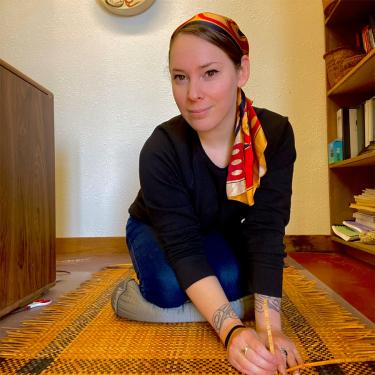 Mangyepsa Gyipaayg – Kandi McGilton
A contemporary Ts'msyen artist from Metlakatla, Alaska, Mangyepsa Gyipaayg – Kandi McGilton practices the unique, endangered Annette Island style of basketry made with cedar bark, canary grass, and maidenhair fern. A student of master weavers Iilskyalas - Delores Churchill and Holly Churchill (Haida), McGilton features an intricate and visually striking element called "false embroidery." Her weaving journey intersects with her work in The Haayk Foundation, a nonprofit with a mission to rapidly produce new fluent speakers of Sm'algya̱x, the language spoken by the Ts'msyen people.
 Mujeres de Barro Rojo
Macrina Mateo Martinez and the ceramicists in her family workshop Mujeres de Barro Rojo (Women of Red Clay) are known for their openness to new shapes and products, while remaining rooted in centuries-old techniques of San Marcos Tlapazola in Oaxaca, Mexico. Their pieces live in the heart of the home: the kitchen. Cookware like comales (flat griddles) and cazuelas (lidded pots) are essential for Oaxacan cuisine. From gathering raw clay on the mountainside to processing it, shaping vessels, burnishing, and firing, the artists make pottery completely by hand, maintaining close connections to place and history.
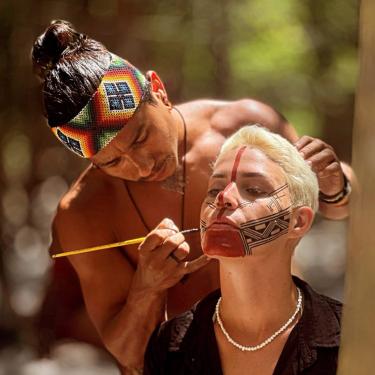 Pataxó Artists
While working to reclaim lands, foods, and language, Pataxó artists living in Bahia, coastal Brazil, are revitalizing their traditions of body adornment. Made from local plants, the body paints are used for distinctive patterns that convey ancestral teachings, history, and spirituality. Today they express Pataxó identity and resistance to the pressures they face as displaced Indigenous people. Working with the Associação Movimento Mecenas da Vida, supported by the Inter-American Foundation, these artists are creating sustainable livelihoods in the community. At the Festival, artists Andwara Pataxó and Txatxu Pataxó from the Reserva Porto do Boi, with presenter Grô Mirawê, will share Pataxó adornments, cuisine, and games.
 Karina Citlalli Ramírez Juárez
A multi-talented artisan, Karina Citlalli Ramírez Juárez has always been interested in learning about her heritage, rooted in the San Lucas Tlanichico community in the municipality of Zaachila, Oaxaca, Mexico. Today she makes feather headdresses associated with the Danza de la Pluma (Feather Dance), a celebrated regional performance tradition. Ramírez learned the skills of featherwork in the Buidoo Xtra Duud workshop of master artisan Ivan Cruz López. Together with Maestro López, she began to work on rescuing and preserving feather art, as well as spreading its use in the community and introducing it to the younger generations. In addition to the large headdresses, she makes smaller, more practical pieces that are inspired by the vibrant Zapotec and Mixtec cultures.
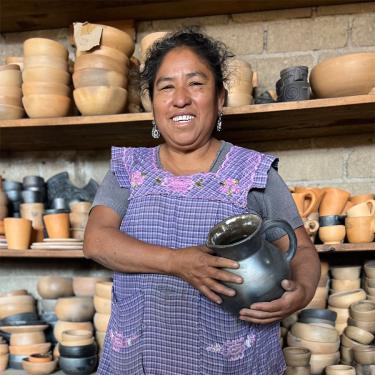 Taller Ruiz Lopez
As a fifth-generation ceramicist, master potter Rufina Ruiz Lopez learned to work with clay from the women in her family, and she keeps the pottery traditions of Santa Maria Aztompa, Oaxaca, Mexico, alive through her cooperative workshop, Taller Ruiz Lopez. Using both red and black clay, the artists, including Aarón Hernández, produce innovative functional, decorative, and sacred wares such as the calaveras or skulls used in altars for Día de los Muertos. Ruiz Lopez is celebrated for her work mentoring young women. She draws inspiration from her Zapotec and Mixtec roots and her reverence for the life-giving earth.
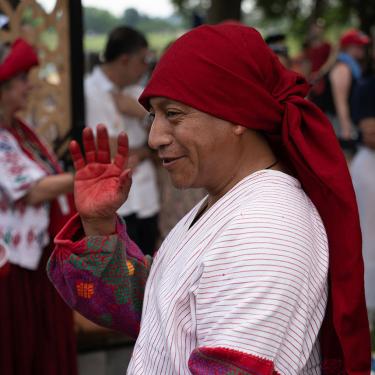 Ubaldo Sánchez and Guate-Maya DC
Ubaldo Sánchez is a cultural leader in the Guatemalan and Indigenous Mam communities in the United States. He has been recognized with the Order of the Quetzal, the Maya government's highest honor, for his cultural, artistic, and civic work. As an artist, Sánchez is an expert in traditional art forms that depend on community efforts to construct, such as alfombras de aserrín (ceremonial sawdust carpets) and barriletes (kites), which are associated with religious and cultural holidays. He has actively created and taught these traditions in Virginia and the greater Washington, D.C., region since 2000.
From the Festival Blog: Unapologetically Maya: Ubaldo Sánchez's Ephemeral Alfombras
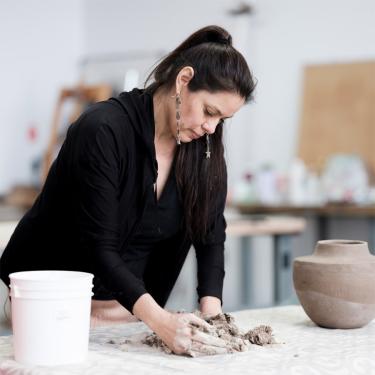 Kathleen Wall
Drawing inspiration from the rich history of Pueblo pottery, Kathleen Wall (Jemez Pueblo/Chippewa) pushes boundaries. Pottery is traditionally a women's art form; Wall learned from her mother, Fannie; grandmother, Cari Loretto; and aunts. Using the skills they passed down, she gathers natural clay from a favorite site near Jemez Pueblo and prepares it for use by hand. Her clay figures tell stories of her Jemez Pueblo community as well as of Indigenous people across the Americas who spark her imagination. Her sculptures explore connections to land and place, names and identity.
Kathleen Wall (Jemez Pueblo/Chippewa)
Isaiah Chinana (Jemez Pueblo)
Jesse Chinana (Jemez Pueblo)
Michael Chinana (Jemez Pueblo)
Tyra Chinana (Jemez Pueblo)
 Yagaa Productores de Seda
The workshops and mulberry groves of the Yagaa silkweaving cooperative are situated in Oaxaca, Mexico's Sierra Norte region (yagaa is the Sierra Norte Zapoteco word for mountain). As one of the co-founders of the cooperative, the Martínez family workshop has been active for over two decades, making use of sericulture (rearing silkworms for silk production) and weaving knowledge passed down through four generations. Moisés Martínez Velasco, Gladys Garcia Flores, and others in the cooperative now work with natural dyes, recovering another ancestral practice. A recently built silk sanctuary has allowed the members to localize the production of silk from moth egg to loom.
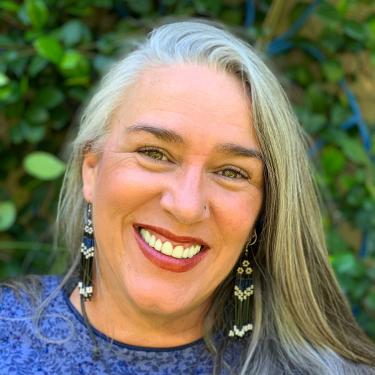 Amy Bruton Bluemel
Amy Bruton Bluemel is an award-winning storyteller, visual artist, and stomp dancer from the Chickasaw Nation, based in Austin, Texas. Her appreciation for cultural awareness came at an early age. She was raised in a military family; she lived in Germany, Okinawa, Turkey, and Scotland before returning to her Chickasaw roots in America. Through her storytelling performances around the country, Bluemel shares the living culture and deep history of the Chickasaw and other Southeastern tribes. She directs and performs with the intertribal dance troupe Chikashsha Hithla.
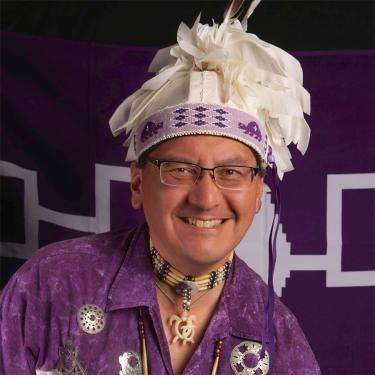 Perry Ground
Perry Ground is a Turtle Clan member of the Onondaga Nation. For more than twenty-five years as a cultural educator, he has been telling stories to promote understanding and appreciation of the culture, beliefs, and history of the Haudenosaunee people. Perry learned many of the stories he shares from elders of Native American communities and feels that practicing and perpetuating the oral traditions of Native people is an important responsibility. He regularly performs at museums, festivals, and schools. Perry is the former project director of the Native American Resource Center within the Rochester City School District and served as the Frederick H. Minett Professor at Rochester Institute of Technology in 2021–2022.
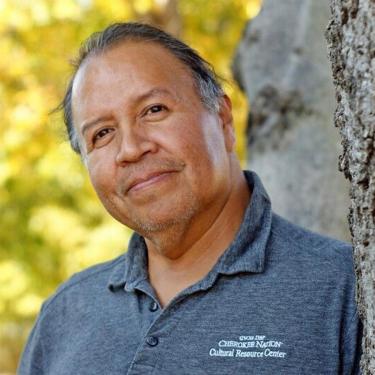 Robert Lewis
Cherokee National Treasure Robert Lewis is a traditional storyteller and visual artist of Cherokee, Navajo, and Apache descent. He works for the Cherokee Nation as a school and community specialist and has also taught art at the college level. Lewis was introduced to the power of storytelling by his parents. Today he travels the country sharing and gathering stories, conveying the richness and variety of traditional knowledge and humor passed on from generation to generation.
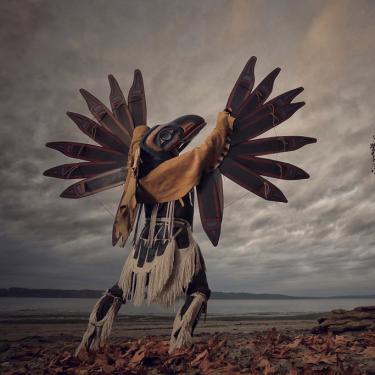 Gene Tagaban/Guuy Yaau
Gene Tagaban/Guuy Yaau is a storyteller, musician, trainer, and counselor of Tlingit, Cherokee, and Filipino descent. Tagaban was introduced to storytelling within his family and became a Raven dancer reflecting his connection to his clan, the Takdeintaan or Raven, Freshwater Sockeye clan from Hoonah, Alaska. He has performed on international stages and in film. Tagaban is also an avid teacher and workshop facilitator, using stories to engage, entertain, and heal.
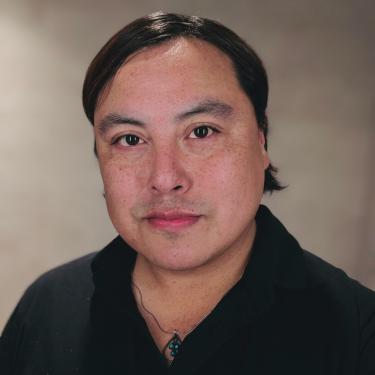 Bradley James Dry
Bradley James Dry is a Cherokee chef who grew up cooking Appalachian food—a cuisine deeply influenced by Cherokee foodways—with his grandma. He has spent more than a decade working in popular Tulsa restaurants. During the pandemic, he transitioned to working for himself and traveling to food festivals and special events, and he contributed to the food featured on the television show Reservation Dogs. Today, he is driven to expand people's perspectives on Indigenous food.
From the Festival Blog: With His Grandmother and Reservation Dogs, Chef Bradley Dry Preserves Cherokee Cuisine
 InterTribal Buffalo Council
The InterTribal Buffalo Council (ITBC) is a collection of eighty tribes in twenty states that facilitates the management of over 20,000 buffalo. ITBC is committed to reestablishing buffalo herds on tribal lands in a manner that promotes cultural enhancement, spiritual revitalization, ecological restoration, and economic development. Wildlife biologist Mikiya Reuther (Fort Peck Assiniboine and Sioux Tribe) and herd development grant specialist Summer Afraid of Hawk (Cheyenne River Lakota) represent the organization at the Festival.
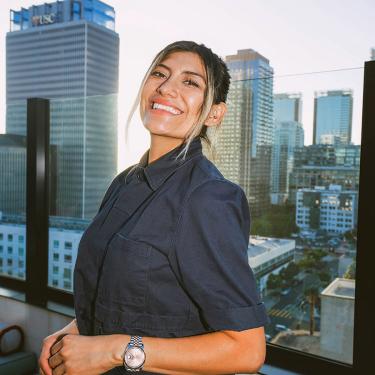 Bricia Lopez
Bricia Lopez is a Mexican American chef, entrepreneur, and cultural ambassador. Through Guelaguetza, her family's James Beard Award-winning restaurant, Lopez and her siblings have propelled Oaxacan cuisine and culture to the forefront of the modern gastronomic scene. Her passion led to the publication of her first cookbook, Oaxaca: Home Cooking from the Heart of Mexico (2019). With her siblings, she has also launched two direct-to-consumer brands, i love micheladas™ and guelaguetza™ mole starters. She hosts the podcast Super Mamas with her sister, Paulina. In 2020, Lopez co-founded re:her, a nonprofit dedicated to the advancement and empowerment of women restaurateurs.
 Robert Kinneen
Rob Kinneen (Tlingit) is a chef born and raised in Alaska, now based in North Carolina and recognized by his peers and fans as the authority on Alaska regional cuisine. He has worked across Alaska and the country, promoting Alaska "Indigenized" cuisine through guest chef appearances, speaking engagements, cooking demonstrations and private caterings.
 Claudia Serrato
Dr. Claudia Serrato (P'urhépecha/Zacateca/Huasteca/Xicana) is a culinary anthropologist, chef, and educator from California. She is recognized for her efforts to preserve and promote traditional Indigenous culinary techniques and ingredients, advocating for food sovereignty and sustainability. Her holistic approach blends academic research with hands-on culinary practice, aiming to foster a deeper understanding and appreciation of Indigenous foodways and their significance in contemporary society. She is co-founder of Across Our Kitchen Tables, a culinary hub and event series that generates and supports socially responsible, food-based work by women of color.
-
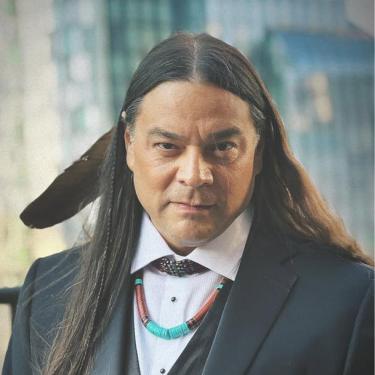
Sean Sherman
As a chef, Sean Sherman (Oglala Lakota) celebrates Indigenous ingredients and techniques in his food. A three-time James Beard Award recipient, Sherman is the creator of Owanmi restaurant in Minneapolis and author of The Sioux Chef's Indigenous Kitchen. He is also the founder of The Sioux Chef, a company that prioritizes native heirloom agricultural products and foraged wild foods, and North American Traditional Indigenous Food Systems (NĀTIFS) and its Indigenous Food Lab, which work to establish a new Indigenous food system that reintegrates Native foods and Indigenous-focused education into tribal communities across North America.
 Wild Bearies
Founded by chef Elena Terry, Wild Bearies is a nonprofit educational and outreach organization that builds stronger tribal communities around the healing power of seed-to-table food. Based in Wisconsin Dells, Wisconsin, Terry worked in the restaurant industry for over a decade before turning her focus to community building and educating through indigenous foods. She spearheaded the international Indigenous Culinary Mentorship program for the Native American Food Sovereignty Alliance, among other important partnerships.
Terry and the "Bearies" travel frequently to promote Indigenous food sovereignty and teach holistic Ho-Chunk foodways. Terry is also a butcher and wild game specialist who enjoys outdoor cooking.
Elena Terry (Ho-Chunk Nation/Prairie Band Potawatomi)
Zoe Lea (Hoocąk)
Celina Hall (Ho-Chunk/Narragansett)
Thalia Nambo (Ho-Chunk)From the Festival Blog: How Wild Bearies' Food Traditions Lead the Ho-Chunk Nation Home
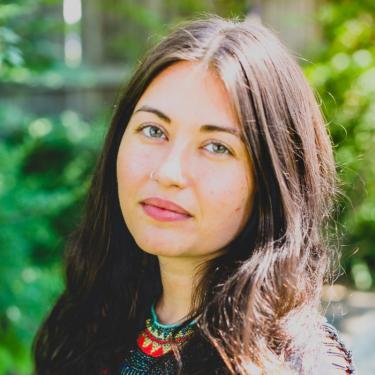 Nico Albert Williams
Nico Albert Williams (ᏣᎳᎩᎯ ᎠᏰᎵ Cherokee Nation) is a chef, caterer, and student of traditional Indigenous cuisines based in Tulsa, Oklahoma. After relocating to Northeastern Oklahoma from the West Coast, Williams embraced her return to the post-removal homeland of her mother's people as a calling and opportunity to reestablish a relationship with her Cherokee community, first and foremost through the language of food.
Her journey to learn traditional Cherokee ways, dishes, and the wild and cultivated ingredients involved in their preparation grew to encompass the Indigenous cuisines of tribes from all parts of Turtle Island, leading to her involvement in Indigenous food revitalization and food sovereignty. She is the founder and executive director of Burning Cedar Sovereign Wellness, a community-driven nonprofit that focuses on offering cultural resources and reestablishing ancestral foodways among Tulsa's Indigenous community.
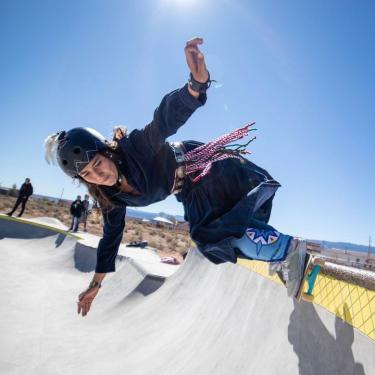 Di'orr Greenwood
As a skater, skate deck artist, and designer, Di'orr Greenwood (Diné) uses pyrography or wood burning, paints, and even precious stones like turquoise to create moving canvases inspired by Indigenous heritage. Greenwood also makes cedar flutes and wearable art. She has created a stamp for the U.S. Postal Service and, most recently, partnered with Nike to release a pair of Nike Dunks she designed.
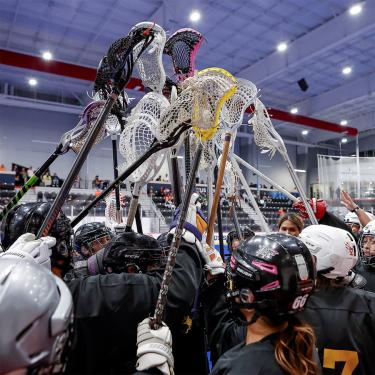 Haudenosaunee Lacrosse Athletes
One of the oldest sports in North America, and one of the fastest growing today, lacrosse is more than just a game. Its first players, the Haudenosaunee people of northeastern North America, know it as a gift from the Creator with a deep spiritual dimension to their communities. The elite Haudenosaunee Nationals lacrosse teams compete worldwide and travel on Haudenosaunee passports as an expression of tribal sovereignty.
Hawhenawdies-Neal Powless works internationally as a lacrosse coach, following his career as a player with five professional and national championships. He is a scholar, speaker, and university ombuds at Syracuse University. Tyler Hill (St. Regis Mohawk) is a lifelong player and multi-championship winning athlete, most recently playing professional box lacrosse. He is the author of a children's book about lacrosse.
Edward Shenandoah (Mohawk) earned multiple honors as a player, and having learned his love of the game from his father and uncles he remains active as a coach.
Gahowanens Shenandoah (Onondaga) is a youth athlete.
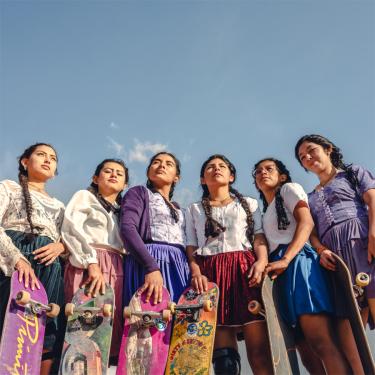 Imilla Skate
Imilla Skate (Aymara/Quechua) is an all-women Indigenous skateboard crew in Cochabamba, Bolivia. They have proudly reclaimed the billowing pollera skirts—an iconic element of Aymara and Quechua Indigenous women's dress—as everyday urban skating gear. The group spreads a message of confidence, self-love, and pride in their public appearances and children's workshops. Through street art and skating, they represent a creative Indigenous presence in the urban landscape of Bolivia.
Elinor Buitrago Mendez
María Belén Fajardo Fernández
Fabiola Gonzales Torres
Brenda Mamani Tinta
Estefanny Morales
Huara Medina Montaño
Susan Meza
Deysi Tacuri
 Manny Santiago
Skateboarder Manny Santiago (Taíno), known as Manny Slays All, was born in Puerto Rico and raised in Massachusetts. He represents Puerto Rico as an Olympic athlete and organizes local tournaments on the island. He has competed in numerous skate competitions and has done extensive work within the skateboarding community.
 Keith Secola, Jr.
Keith Secola, Jr. (Northern Ute/Anishinaabe), is an interdisciplinary visual artist whose work explores Native voices, identities, and histories, often using archival images. He grew up in the Southwest and belongs to the Ute Indian Tribe on his mother's side and the Bois Forte Ojibwe on his father's side. His earliest influences in the arts came from his experiences with his father, a musician. As a skater, Secola rode with the Apache skateboard team. In addition to his studies in visual art, he strives to connect with traditional ways of life, dances, and knowledge in his home communities.
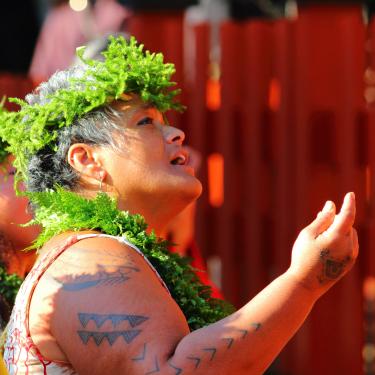 Hālau ʻŌhiʻa
Established by renowned Hawaiʻi educator, scholar, and recording artist Kumu Hula Kekuhi Keali'ikanaka'oleohaililani, Hālau ʻŌhiʻa is a traditional learning space that uses hula ʻaihaʻa, hula Pele, chant, and Hawaiʻi ritual, to bridge and intersect science, academia, business, and spirit through Hawaiʻi lifeways. In recent years, they have organized the annual Edith Kanakaʻole World Oli (Hawaiʻi Chant) Festival, as well as other educational and ceremonial opportunities centered around kaʻao (narrative storytelling), hula (environmental dance), and oli (chant).
Kekuhi Kealiikanakaoleohaililani, Kumu Hula
Kauila Kealiikanakaoleohaililani
Ke'ala Ostrowski
Kekoa RosehillLocal Participants
Rosie Alegado
Puanani Brown
Rumiko Castro Muto
Molly Eguchi
Tam Fiely
Susanne Fuller
Tomoko Gakiya
Leahi Hall
Maile Kaku
Laura Kawano
Adin Kawate
Joe Kern
ʻŌpua Kern
Leialoha Mara
Susan Najita
Jenna Noelani Rycroft
Donnelle Sawyer
Amy Stillman
Nicole Stutz
Nuni Walsh
Keanu Yamashita
Tomoko Yamashita
Akiko Yoshikawa
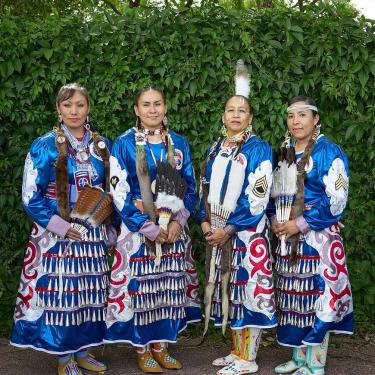 Native American Women Warriors Association
Native American Women Warriors (NAWW) was founded in 2010 and recognized as the first all-women Native American color guard organization. American Indians and Alaska Natives have one of the highest representations in the armed forces, and Native American women are the fastest-growing population of veterans. NAWW empowers active and retired Native American servicewomen with tools and support. They serve their communities and organizations by performing color guard duties, volunteering, and more.
Lori Archiquette (Mi'kmaq)
Natalie Holt Breen (Abenaki)
Trevor Breen
Nieva M. S. Brock (Higuayagua of the Caribbean/Taíno)
Selisha Lossing
Inez Sanchezolmos (Northern Arapaho)
Hugo Sanchezolmos (Northern Arapaho)