

Learning Together
“If our people are alive, our traditions still need to be alive.”
“It is important to me to keep our family’s traditions going.”
Young people often find their time structured by the daily and seasonal rhythms of formal school, from pre-K to the end of high school and the beginnings of adulthood. Yet school is hardly the only place that emerging artists and artisans learn.
Family businesses, apprenticeships, camps, and community organizations create spaces for other kinds of learning. Whether in formal programs or through informal meetings with neighbors and family friends, these extracurricular teaching relationships ensure that traditional knowledge and skills are passed from generation to generation.
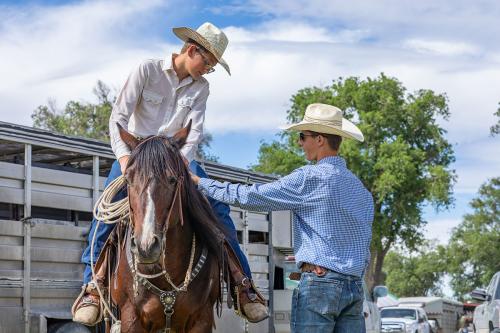
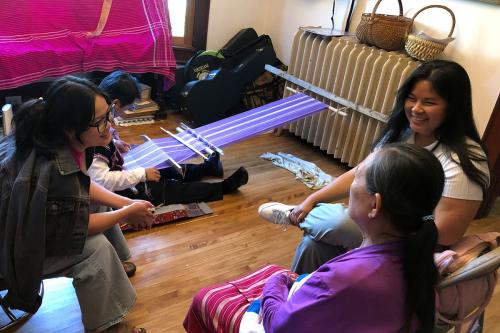
Making is a way of coming to know things: environments, histories, and ways of living and belonging. In such settings, creative skills are connected with ways of life and enduring values. When people gather together to weave, when ranchers use the tools their loved ones or neighbors have made to earn their living, and when makers and musicians pull sounds out of handcrafted instruments, the stories of families and communities are told and retold.
In the Learning Together area at the Smithsonian Folklife Festival, see family and community workshops come to life on the National Mall. Learn how handmade objects—and the skills and stories behind them—contribute to distinctive ways of life and cultural legacies across the United States.
Artists & Artisans



Presenters
Julia Aguilar Jerez, arts educator
Steven Hatcher, director, Folk and Traditional Arts Program, Idaho Commission on the Arts
Evangeline Mee, Traditional Arts Specialist, Tennessee Arts Commission
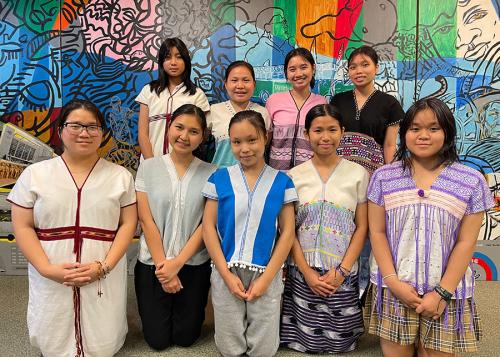
Photo courtesy of Karen Weaving Circle
Karen Weaving Circle
The Karen Weaving Circle is a group of refugee weavers who came together to revive their textile tradition after moving to the United States. Members meet at the East Side Freedom Library in Saint Paul, Minnesota, to weave together and to hold classes for the next generation of Karen artisans. As a program of the Karen Organization of Minnesota, the Weaving Circle enhances community wellbeing and builds bonds between elder and younger generations around culture, language, and craft. The weavers also participate regularly in art fairs and community events as well as presentations in public schools.
Karen (pronounced kuh-REN) people from Burma (Myanmar) in Southeast Asia are a linguistically and culturally diverse people, who are among the refugees displaced due to government suppression of minorities. Around 20,000 Karen people live in Minnesota.
Participants
Aye Lwai, weaver
Htee Hser, weaver
Ku Say, weaver
Mae Ra Paw, weaver
Rosie Say, weaverHta Thi Yu Moo, presenter
Synthia Htoo, presenter
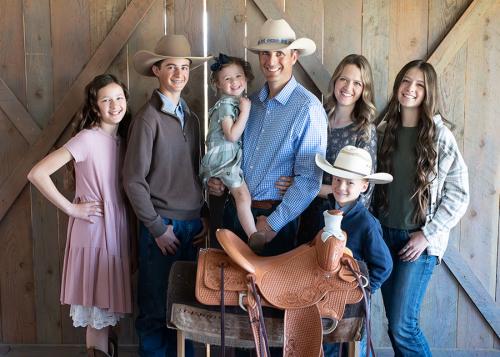
Photo courtesy of the Carter family
Carter Family – Saddle Making
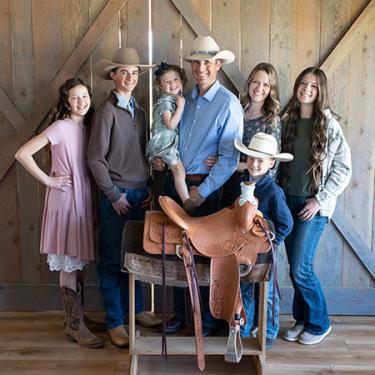
The Carters of Pingree, Idaho, are fourth-generation ranchers, farmers, and craftspeople. They make saddles and tack (horse equipment) that serve not only as useful tools in their work but also express pride in their traditions and skills. Chase Carter learned leatherwork and saddle making from a young age, including an apprenticeship in saddle making with Kent Frecker. Chase is passing these skills along to his children and other community members. Bronson, Whitley, and Chase are part of the Traditional Arts Apprenticeship program, winning support from the Idaho Commission on the Arts to concentrate on learning saddlery from their father.
Participants
Chase Carter
Merrick Carter
Whitley Carter
Bronson CarterHayden Carter
Casten Carter
Tesslee Carter
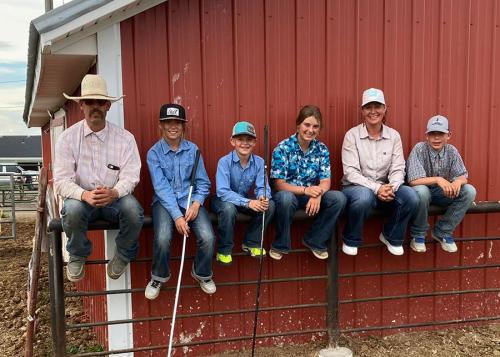
Photo courtesy of the Severe family
Severe Family – Leather, Silver, and Beadwork
The members of the Severe family are working ranchers who also practice several specialties in Western crafts: saddlery, leatherwork, silverwork, cordage, and beadwork. All these skills come together in custom tack (horse equipment) used by ranchers and Western riders. Anna Severe learned leatherwork as a young adult from George and Kelly Martin and later studied saddlery with Matt Severe’s relatives, Bob and Suzette Severe. Anna mentors her children and other learners today, carrying on a craft legacy that spans Idaho and the Western states. Anna is part of the Traditional Arts Apprenticeship program as a mentor, winning support from the Idaho Commission on the Arts to teach a younger artisan.
Participants
Anna Severe
Matt Severe
Reata SevereSkeeter Severe
Jaycee Severe
Quincy Severe
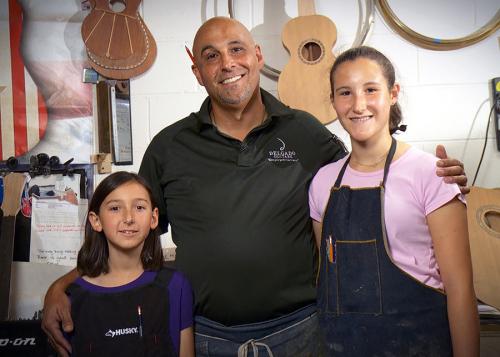
Photo courtesy of the Delgado family
Delgado Family – Mexican American Luthiery
The Delgado family has been making musical instruments entirely by hand for four generations, from their founding in Torreón, Coahuila, Mexico in 1928. Supporting musicians and the music industry, the family business moved to Juarez, Mexico; Los Angeles, California; and now Nashville, Tennessee. They proudly carry on “old world” techniques of hand-building fine instruments such as acoustic and classical guitars, mariachi instruments like vihuelas, and many other kinds of stringed instruments. Highlighting the Latino contribution to the musical and artistic life of the United States, their showroom and workshop in Nashville also hosts the Music Makers Stage and community events.
Ava and Lila Delgado have been helping around the workshop since they were little, and their father, Manuel, is instructing them in traditional luthiery as he learned from his father and grandfather. They have participated in the Tennessee Traditional Arts Apprenticeship Program, sponsored by the Tennessee Arts Commission. Ava and Lila completed their first instruments before the age of ten, beating their father’s record (age twelve) and their grandfather’s (fourteen).
Participants
Ava Delgado
Lila Delgado
Julie Delgado
Manuel Delgado
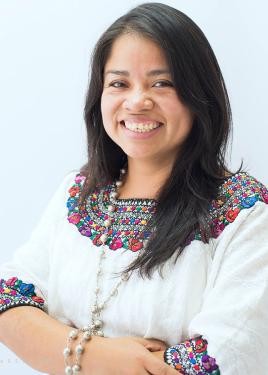
Photo courtesy of Evelyn Morán Cojoc
Evelyn Morán Cojoc
Evelyn Morán Cojoc is a painter whose work celebrates the ancestral traditions and cultures of Guatemala. Born in San Cristóbal, Alta Verapaz, Guatemala, into an artistic family, Morán Cojoc is inspired by her Poqomchi’ Maya culture. As a cultural organizer, she has spearheaded festivals and curated exhibitions in multiple countries. Morán Cojoc is also an avid teacher, leading workshops with young people across Guatemala. Her work has been exhibited internationally, including a recent major commission presented in Vatican City.