
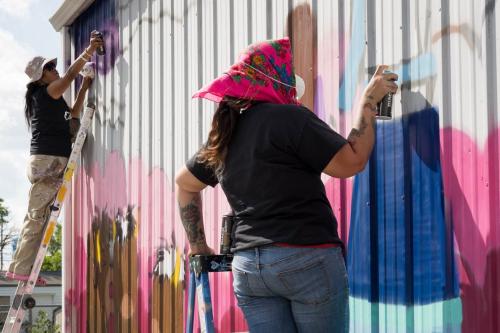
RedCan artists work on a mural in Eagle Butte, South Dakota.

Streetwise
“Streetwise” is a characteristic once primarily associated with city life. More generally, it describes someone who navigates their immediate environment, but also the broader world, with a certain knowledge and resourcefulness that comes from “on the ground” experience. Someone who is streetwise has a keen understanding of their surroundings. They make sound decisions under pressure, adapting and improvising as necessary to find a solution to a challenge.
The Festival’s Streetwise activities and presentations showcased the creativity with which young people, past and present, express their connections to the public spaces they inhabit. Whether living in urban, suburban, or rural communities, they claim these sites through a range of creative practices—mapping routes and communities and reshaping their surroundings in the process. In real life, and out on the street for all to see, they transform everyday spaces into hubs of display, interaction, and community. As artists and athletes, their activities often emerge in unofficial, irreverent, and unexpected ways.
Here we highlight several forms of expressions:
(Click a category to jump down and read more)
Participants presented skating demonstrations, live paint skate decks and murals, and demonstrated the arts and techniques involved in customizing cars and bikes. Visitors signed up for skateboarding lessons, participate in family activities, and learned about the traditions, communities, and skills embodied in these creative practices. Live DJ sets provided daily changing soundscapes that highlighted different music subcultures.
Lowrider Culture
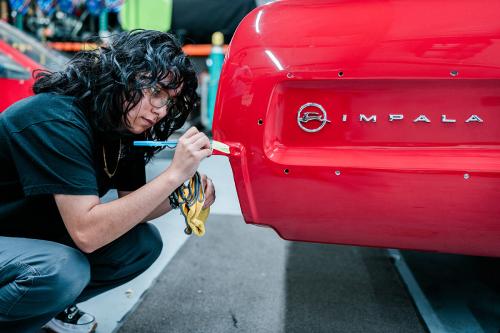
Originating in post-WWII Mexican American communities in the U.S. Southwest and California, lowriders are an expression of creative craftsmanship, with cars featuring bold paint, chrome details, and intricate upholstery. Lowrider culture has evolved into a powerful form of Latinx artistic, political, and cultural expression that honors heritage, builds family identity, and fosters intergenerational knowledge.
Today, lowrider culture extends across ethnic, racial, and national borders. Women and youth are increasingly shaping its future—while still honoring its roots.
This program is produced in collaboration with Corazón y Vida: Lowriding Culture, opening October 2025 at the National Museum of American History.
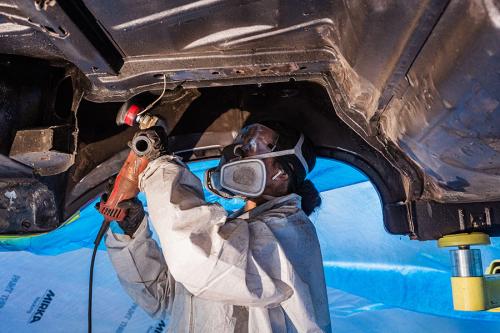 Photo by Andri Tambunan, courtesy of SAVA
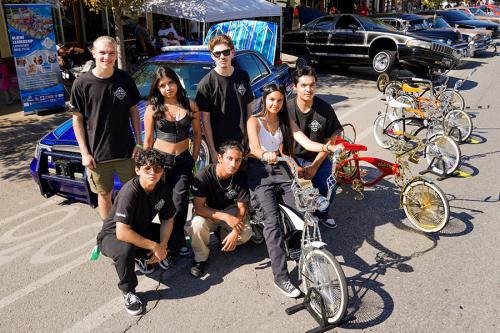 Photo by Christopher Erazo, courtesy of Olathe Leadership Lowrider Bike Club
Olathe Leadership Lowrider Bike Club
The Olathe Leadership Lowrider Bike Club, a project of Olathe Public Schools in Kansas, helps high school students find a sense of belonging. Organized after school, it’s open to students across the district. Beyond technical skills and mentoring from the local art community, it provides academic support, fosters creativity and collaboration, and involves students in community service. Since its inception, the club has achieved a 100 percent graduation rate, with thirteen chapters supporting students nationwide. Chapters have been featured in news media, including the Kansas City Star for the Olathe chapter and 60 Minutes for the Albuquerque and Española, New Mexico, chapters.
Participants
Logan Bonney
Jean Cantero Segura
Ilan Cuomo-Wilkerson
Christopher ErazoErik Erazo
Mia Estrada
Ty’Erra FieldsStephanie Garcia Rios
Mathew Jonas
Ashley Pichardo
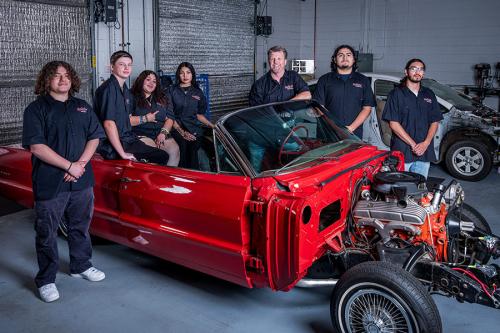 Photo by Andri Tambunan, courtesy of SAVA
Sacramento Academic and Vocational Academy
Sacramento Academic and Vocational Academy (SAVA) is a seventh- to twelfth-grade public charter school in Sacramento, California. In 2023, they launched the EV Lowrider Conversion Project as part of its Advanced Automotive Technologies pathway. Funded by grants and partner donations, students began transforming a ’64 Chevy Impala into a fully electric vehicle through hands-on learning, field trips, and support from local agencies who provided EV components. The project bridges clean-energy innovation with the cultural legacy of lowriders in Sacramento’s Latino communities, offering students a unique opportunity to engage in both automotive technology and cultural history while preparing for careers in clean energy.
Participants
Ash Dalal
Morri Elliott
Jaime Lemus
Ashley Madden
Joseph MuñozCarlos Rodriguez
Nayeli Rodriguez
ShaVolla Rodriguez
Jason Sample
Michael SerdiWyatt Showen
Brandt Smedstad
Tim Sprinkles
Andri Tambunan
Scott Williams
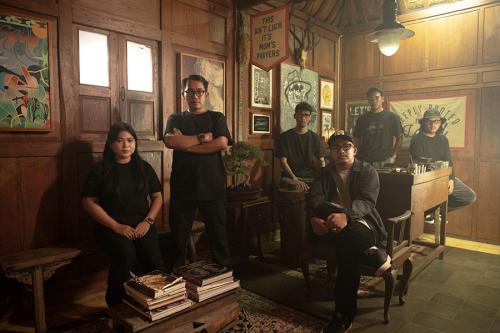 Photo by Abyakto Manggolo
SWEDA
SWEDA is an Indonesian jewelry brand that preserves traditional silver craftsmanship, creating distinctive, handcrafted jewelry. The word sweda, from Old Javanese, means “fingers”—a tribute to the artisans who shape each piece by hand. Inspired by the techniques and artistry of their elders, SWEDA artisans create work that draws energy from youth subcultures, music, and the arts. SWEDA has collaborated globally with celebrities, musicians, artists, brands, and communities, including U.S. lowrider clubs.
Participants
Syahrizal Anwar
Hernawati Tri Budisusanti
Taufik HidayatSurya Aditya Putra
Ilham Ramadhani
Verry Donovan Cahyo Aji Sukmo
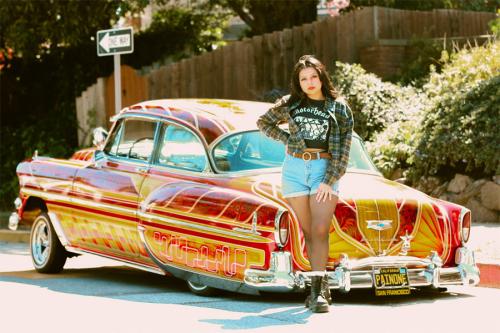 Photo courtesy of Cecelia Perez
Cecelia Perez
Cecelia Perez is a visual artist and entrepreneur with a passion for Chicana/o art and culture. Known artistically as Hey Ruca, Perez works with imagery that celebrates strong women and her Mexican American heritage. She is particularly inspired by lowrider art and custom classic cars, and her designs have been featured in museums, art galleries, and universities. Her art and involvement in the lowrider community have earned her a feature in Lowrider Magazine and collaborations with national sports teams.
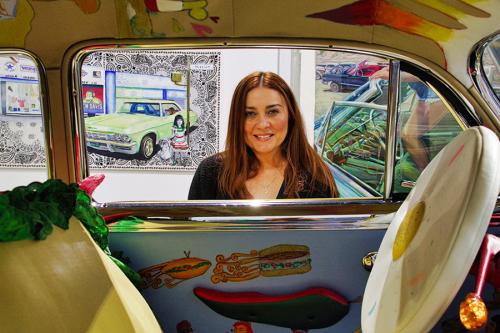 Photo by Alex Trocker
Denise M. Sandoval
Denise M. Sandoval, a professor of Chicana and Chicano Studies at California State University, Northridge, is among the most prominent scholars of lowrider culture. For nearly two decades, she has explored the impact of lowriders on American culture in publications and exhibitions. She curated Best in Low: Lowrider Icons of the Street and Show at the Petersen Automotive Museum (2024–2025) and edited a special issue of Lowrider magazine that focuses on women. She is co-curator of the Smithsonian’s traveling exhibition Corazon y vida: Lowrider Culture, which opens at the National Museum of American History in October 2025.
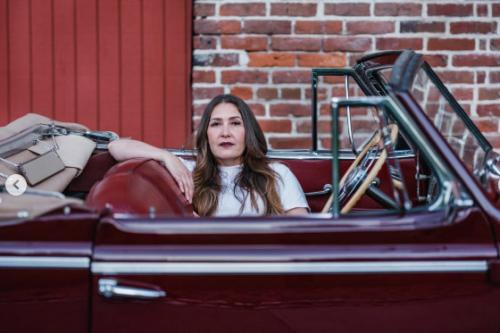 Photo by Andri Tambunan, courtesy of ShaVolla Rodriguez
ShaVolla Rodriguez
ShaVolla Rodriguez is a curator at the California Automobile Museum in Sacramento. She is deeply involved in the region’s lowrider community, having grown up in a family of lowrider enthusiasts and as an active member of The Duke’s, the oldest continuous lowrider club in the world. In 2023, she combined her love for customized vehicles with her dedication to youth development when she advocated for the launch of the Electric Vehicle Lowrider Conversion Project at the Sacramento Academic and Vocational Academy. She and her husband, Carlos Rodriguez, have served as advisors for the SAVA project. In 2024, she curated the exhibition Rucas y Carruchas: Ladies in Lowriders at the California Automobile Museum.
Street Art and Graffiti
Graffiti and street art come from the urban margins, with “writers” and artists challenging the status quo through intricate, stylish, and competitive painting. Once derided as a criminal act, today street art is embraced as a global movement and a form of public art that can reflect and empower local communities.
Whether urban or rural, graffiti writers and muralists often maintain the protest mindset and grassroots methods of the art forms’ roots. Street art lends itself to participatory co-creation, giving ephemeral expression to voices and views that may have few official outlets. Murals and graphics engage with all kinds of issues, and artists rewrite public spaces with the identities and perspectives of a place’s creative inhabitants.
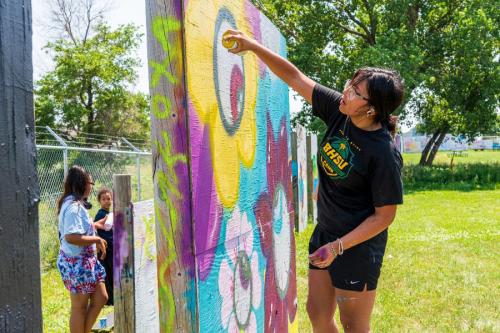
Young Indigenous artists from the Cheyenne River reservation experiment with graffiti and create new works during the annual RedCan Graffiti Jam.
Photo courtesy of Cheyenne River Youth Project
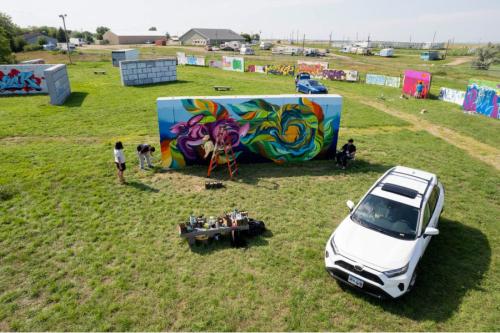
The public Waniyetu Wowapi Art Park is transformed by the work of emerging Indigenous artists.
Photo courtesy of Cheyenne River Youth ProjectRedCan Invitational Graffiti Jam
Launched by the Cheyenne River Youth Project in 2015, the annual RedCan Invitational Graffiti Jam is a groundbreaking arts and culture festival that brings high-profile graffiti and street artists from around the country together with Lakota artists and youth on the Cheyenne River Sioux Reservation. Over four days of collaborative artmaking, the artists beautify public spaces around Eagle Butte, South Dakota; transform CRYP’s public Waniyetu Wowapi (Winter Count) Art Park; and highlight Native songs, dances, regalia, and more. This powerful intersection of graffiti culture and Lakota culture resonates deeply with Lakota youth, who embrace this opportunity to sharpen their creative tools, explore their identities, reclaim their culture, strengthen their community, assert Indigenous presence, and share the stories of their land and their people.
Participants
Antonio Eagle Bear (Rosebud Sioux Tribe)
Kai’len Turning Heart (Cheyenne River Sioux Tribe)
Wambli Quintana (Cheyenne River Sioux Tribe)
Hoka Skenandore (Oneida Nation of Wisconsin, Oglala Lakota, La Jolla Band of Luiseno, Chicano)
Skating and Skate Arts
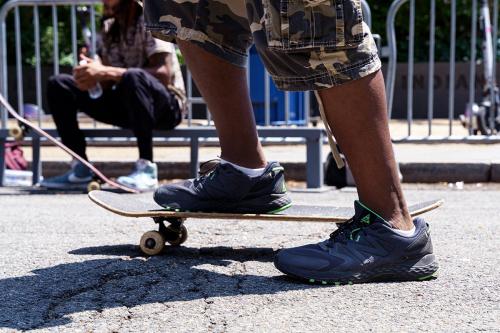
Although skateboarding has risen to global prominence as a sport, it has always embodied intrinsic values that connect it to youth culture.
As a mode of travel, it offers independence, expanding the number of places you can go and how you get there. It offers a vehicle for creative self-expression, from the style of your skating to the way you dress or decorate your board. This emphasis on creativity extends to connected artistic expressions like street art and DJ culture. Most of all, it fosters a sense of belonging and teaches you how to build and maintain a community, with its own set of rules often outside of more rigid societal structures. The heart of these communities are local skate shops, skateparks, and DIY skate spots. In these spaces, it is encouraged to try out new things, arrange obstacles in different ways, and its normal to fall, dust yourself off, and try again.
As a skater, your local skate shop is your headquarters. It is where you buy your supplies, where you go to build your community. Young skaters often use these spaces to find inspiration, mentorship, and each other. We partnered with two local shops this year to help host our skate jams, skating showcases where visitors witnessed the skills and creativity of D.C.’s local talent.
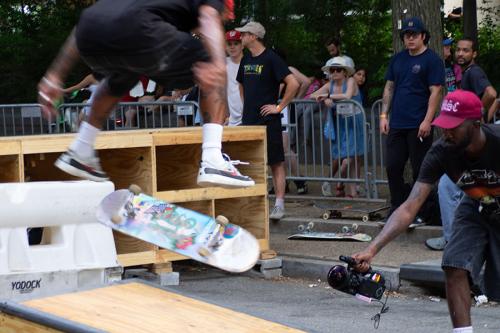 Photo by Craig Fergus, Ralph Rinzler Folklife Archives
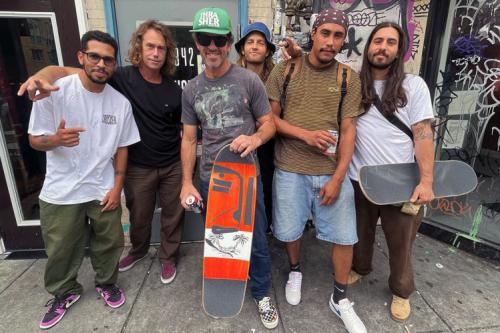 Photo courtesy of Crushed Skate Shop
Crushed Skate Shop
Located in the U Street Historic District, Crushed Skate Shop is the only skate shop within D.C. proper, carrying the torch from former shops such as Art Under Pressure (AUP), Bureau, and Palace 5ive. Owner Brian Aguilar was born in Silver Spring, Maryland, and has been skating for over twenty years.
“All the skate shops that I always went to were always there for the community,” he says. “It’s been so sick to have the support that we’ve had, and to be in the community, and to be able to talk to people and teach them. That’s what Crushed is for.”
Participants
Brian Aguilar
Tom Alexander
Santos ArevaloGeorge Diaz
Christian Diaz
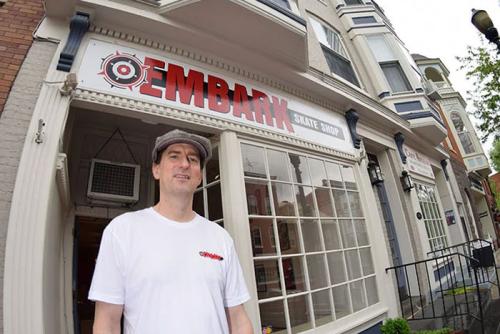 Photo courtesy of Crushed Skate Shop
Embark Skateboard Shop
Starting as a shop rider for Pitcrew, Embark’s predecessor in downtown Frederick, Brent Porterfield leveraged his knowledge of the skateboarding business and his love for the community into his own shop on Market Street.
“I got into skateboarding just being a kid and loving being outdoors,” Porterfield says. “It’s great—the people that I’ve met and the places that I’ve been because of skateboarding. And it really does draw people together. You really get together, and it becomes a really tight-knit community.”
Participants
Brent Porterfield
Eric Goldman
Thomas Gumphries
Eddie GutierrezColin Mcpheeters
Isaiah Rosser
Caleb Shank
Ben Swauger
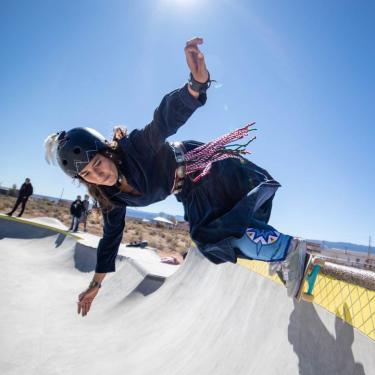 Photo courtesy of Di’Orr Greenwood
Di’Orr Greenwood
Diné multidisciplinary artist Di’Orr Greenwood uses pyrography (wood burning), paints, and even precious stones like turquoise to create moving designs inspired by her Indigenous heritage and Navajo Nation homelands and people. She also creates cedar flutes and wearable art and has collaborated with major partners from the U.S. Postal Service to Nike. Alongside her skating and creative work, Greenwood serves as a community leader and advocate for Indigenous issues. Greenwood’s team includes her relatives Brice Bowman and skater Samuel Bowman.
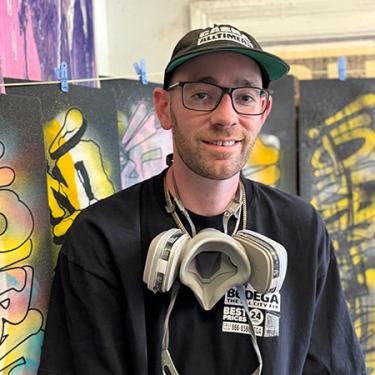 Photo courtesy of Skyler Kelly
Skyler Kelly
Known artistically as Hootie Hoo, Skyler Kelly is a D.C.-based artist and muralist who makes custom hand-lettered skateboard grip-tape art using graffiti techniques. His work can be found on skateboards, walls, and in local skate shops around the District of Columbia, Maryland, and Virginia.
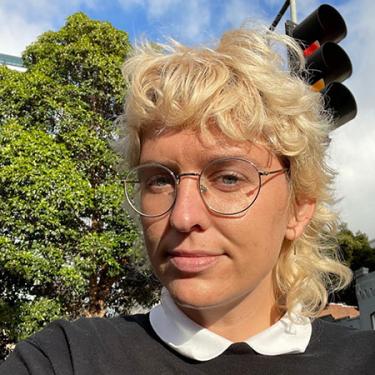 Photo courtesy of
Han Bauer
Han Bauer is a trans, non-binary skateboarder, community organizer, and public health professional based in Washington, D.C. They are the founder of Flo DMV, a grassroots skate collective that creates inclusive spaces for skaters of all identities—especially trans, queer, and non-binary individuals—to learn, connect, and express themselves without fear of judgment or exclusion.
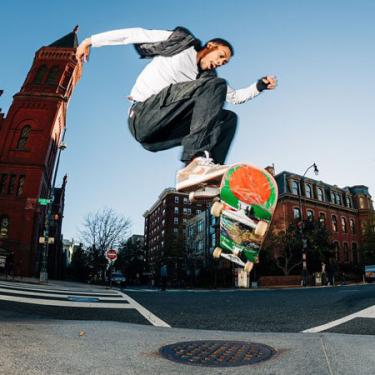
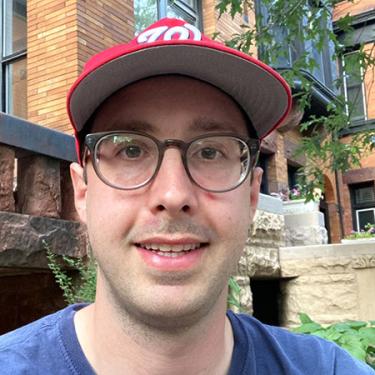 Photo courtesy of Chris Schlegel
Chris Schlegel
Chris Schlegel grew up skateboarding every day with his older brother. They would take the Metro to downtown D.C. on the weekend, ride up and down Pennsylvania Avenue, and then eventually explore all of the city. Skateboarding has shaped his life. He found his partner, best friends, and dream jobs through skateboarding. In the summer, Schlegel works as the director of Camp on Wheels, a skateboard camp in Reston, Virginia.
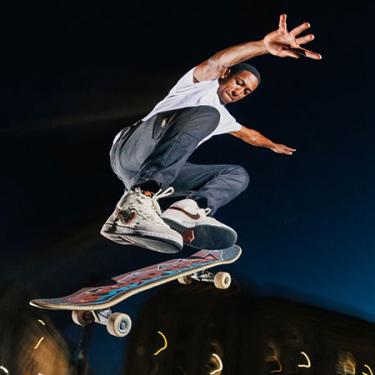 Photo courtesy of Jordan Taylor
Jordan Taylor (JT)
JT is a prominent figure in Washington, D.C.’s skateboarding community. As the founder and head instructor of JT Skate School, he has been teaching skateboarding across the D.C., Maryland, and Virginia region since 2016, offering lessons to individuals of all ages and skill levels. JT is also involved with Crushed Skate Shop and is recognized for his volunteer work with Cuba Skate, connecting local and international skate communities.
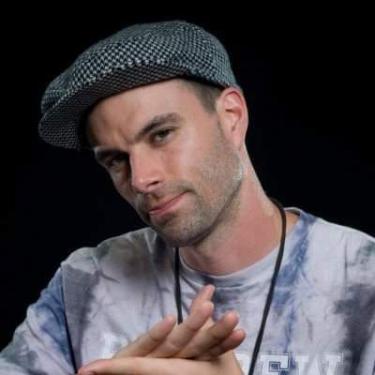 Photo courtesy of Jimmy Pelletier
Jimmy Pelletier
D.C. native and former Pitcrew rider Jimmy Pelletier learned to skateboard from his sister in 1976, at age five, on a plastic Free Former board on the streets of Columbia Pike. By 1984, he discovered the underground culture of skateboarding and alternative punk rock. In 2007, he founded The DC Wheels, an organization with a mission to overcome longstanding stereotypes that surround skateboarding by helping others, reinforcing positivity, and supporting a healthy lifestyle. The DC Wheels focus their charity work on the needy and the ailing. At the Festival, Pelletier will lend his skills as an emcee and presenter.
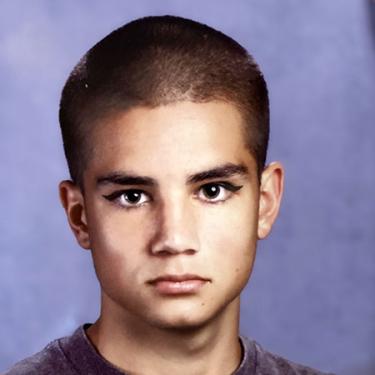 Photo courtesy of Alasdair Delgado
Alasdair Delgado
Alasdair Delgado is a student, skater, photographer, and community archivist.
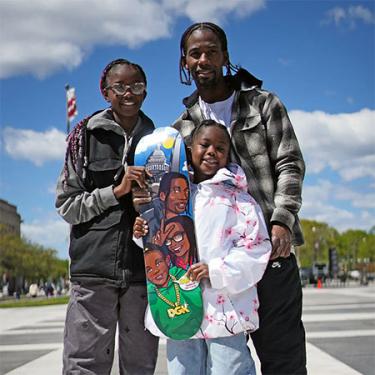 Photo courtesy of the Harpers
The Harpers
The Harpers—former professional skateboarder Darren Harper and two of his daughters, Tink and Demi—have captivated a growing fanbase with viral videos as the girls learn to skate. Harper honed his skills at Pulaski (or Freedom Plaza) in downtown D.C. which resulted in sponsorships by several top-tier brands. Now he passes his skate wisdom and passion to his daughters.
Sidewalk Astronomy
Sidewalk astronomy brings the cosmos to city blocks and street corners. A form of community or participatory science, professional and amateur astronomers alike have organized these activities in U.S. cities since the nineteenth century. Setting up their telescopes out in the city—where planets, stars, and celestial phenomena are often invisible—sidewalk astronomers remind us of our place in the universe.
These and other participants from across the 2025 Festival program provided presentations and sky-viewing events exploring and bridging diverse knowledge systems—blending scientific inquiry with cultural perspectives to deepen our understanding of the cosmos.
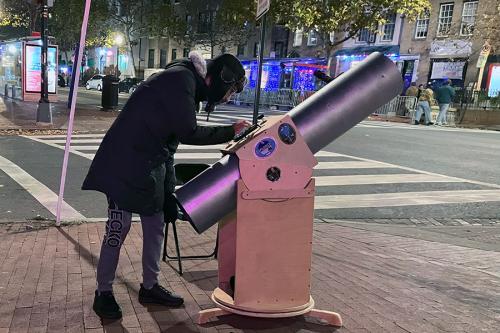 Photo by Sojin Kim
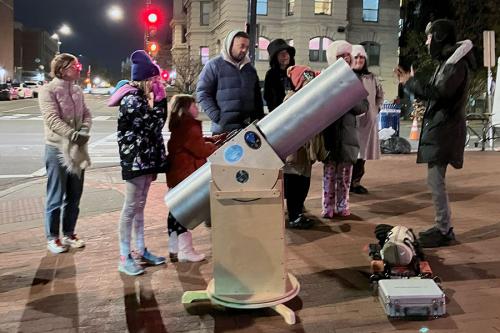 Photo by Sojin Kim
National Capital Astronomers
The National Capital Astronomers club has been serving science and society as a volunteer-run organization since 1937. A diverse and intergenerational group, they contribute to advancing astronomy and related science through research, education, and public programs, including sidewalk astronomy and monthly lectures by noted astronomers and other scientists.
Participants
Gael Gomez
Guy Brandenburg
DJing
At the Festival, community skate sessions and jams were accompanied by the next generation of DJs representing the DMV (D.C., Maryland, Virginia region) and New York. Check out a different set of sounds and personalities each day, curated especially for our skate park.
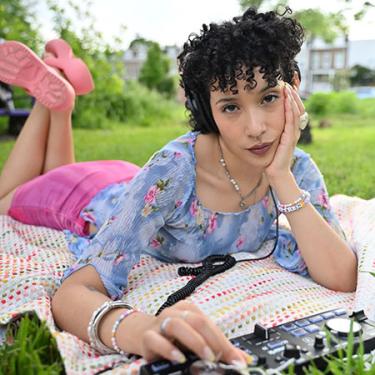 Photo courtesy of DJ Tropigal
DJ Tropigal
Tropigal is a Nicaraguan American DJ and community organizer with a love for curation and connection. Her style is ever evolving but rooted in a Latin and club heartbeat that sparks freedom and movement. She is the co-founder of Lavender Evolutions, a community collective by and for Queer and Trans People of Color, and Paraíso, a tropical party series at the intersection of rhythm and art. Tropigal sees the dance floor as a space for pure expression, uniting queer communities of color through music and community.
Set: Wednesday, July 2
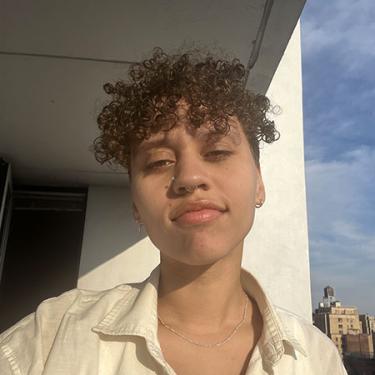 Photo courtesy of DJ Gatite Gangster
DJ Gatite Gangster
Gatite Gangster is a New York City-based DJ, passionate about building community through music. Blending Afro and Latine house, perreo, baile funk, and other genres, their sets are all about energy and connection—feeling the crowd, exchanging rhythm, and creating an electric moment together.
Set: Thursday, July 3
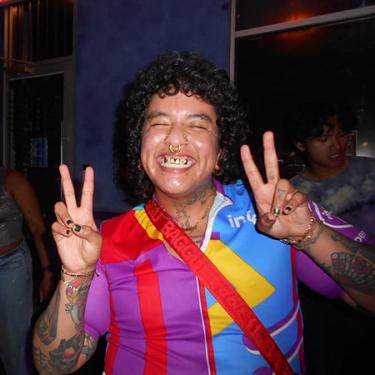 Photo courtesy of DJ EL SUCIO
DJ EL SUCIO
EL SUCIO, a Peruvian DJ and event curator based in Washington, D.C., blends Latin American underground and alternative sounds from across the diaspora. As a co-organizer of Maricoteca, a queer Latinx dance party, they invigorate guests through a meticulous selection of seductive sounds and beats.
Set: Friday, July 4
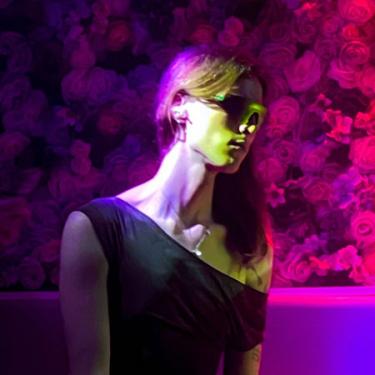 Photo courtesy of
DJ Hissyfit
Hissyfit brings harD.C.ore, jumpstyle, and hard club that is guaranteed to make your hips move and hair shake. Crunchy kicks, melodic synths, and catchy samples are key to her energetic sets. She is not afraid to slow it down and speed it up; contrast is key to control the chaos. While based in D.C., Hissyfit has played venues across the East Coast.
Set: Saturday, July 5
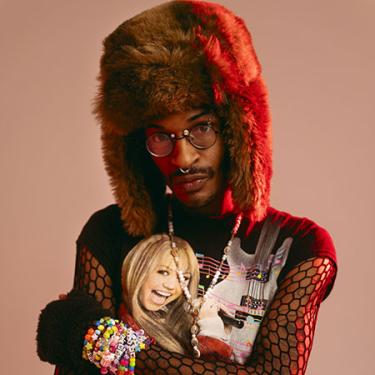 Photo courtesy of DJ Girlypop Princess
DJ Girlypop Princess
Girlypop Princess a Baltimore-based queer artist and DJ known for their vibrant, genre-blending music that celebrates queer identity and underground club culture. Their work spans various styles, including Baltimore club, Jersey club, ghettotech, jungle, and Miami bass.
Set: Sunday, July 6
DJ Aldo Andres
Aldo Andres mixes Latin American music with electronic tracks from all over the world, especially bachata and house. He is the host of Latin Remix, social dance parties that take place at Public Bar in Dupont Circle, D.C., as well as a member of SpiritWild, a local group of artists who focus on wellness sessions relating to breath and movement.
Set: Monday, July 7
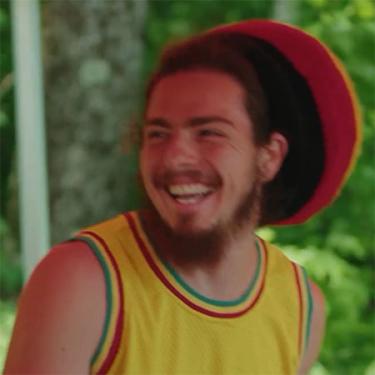 Photo courtesy of DJ Jah Messenger
DJ Jah Messenger
Jah Messenger is an Argentine American Rastafari vinyl DJ and cartoonist born and raised in the D.C. metropolitan area. His passion lies in storytelling and truth telling through practices of visual art and music.
Sets: Every day of the Festival