
Music Apprenticeship
“We’re not just a mentorship program, but we’re building a community. We’re building access.”
Human communities, regardless of where we are, have made music together throughout history. Within each community, the permanence of its music traditions depends on the generational renewal of those who dedicate themselves to this art. In many cultures, this happens in universities, conservatories, and music schools, but in others, continuity depends on organic intergenerational teachings within the communities.
In the United States, many musical cultures are preserved through the oral transmission of knowledge, techniques, and traditions. This ensures not only the permanence of traditions but also their renewal, so that they remain relevant to new generations.
The Music Apprenticeship area of the 2025 Smithsonian Folklife Festival presents examples of this relationship between students and teachers, showing the multiple ways of teaching-learning created by each human community as part of its cultural heritage. Through workshops, master classes, concerts, and discussions, we experience how multiple musical traditions flow between generations.
Below, get an introduction to the outstanding music mentors and mentees who participated in the Festival. Experience the musical traditions of contradance, hip-hop, bluegrass, mariachi, pop, classical, and many others and marvel at the cultural techniques, skills, and values that musicians need to sustain their communities.

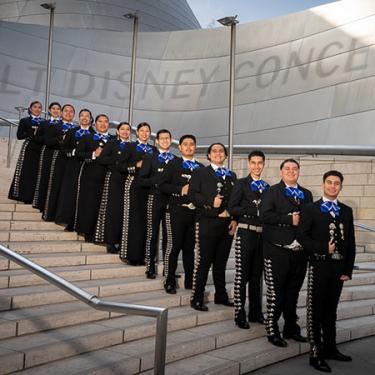


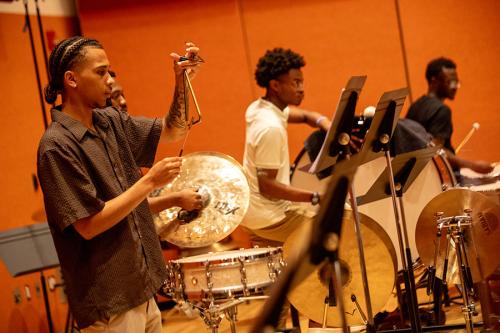
Photo by Tom Keene
Alliance of Black Orchestral Percussionists
“Seeing people like me at ABOP was stunning. Meeting the director and learning that he had similar struggles to me was important for my musical career.”
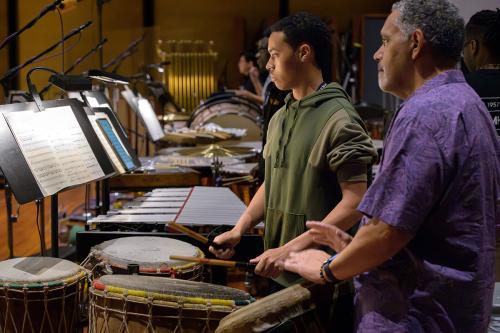
—G. Harvey, protégéThe Alliance of Black Orchestral Percussionists (ABOP) is a nonprofit institution that helps young Black orchestral percussionists nationwide achieve their dreams of becoming professional musicians through a comprehensive mentorship program. Since its establishment in 2021, ABOP has provided its protégés with one-on-one lessons, master classes, workshops, assistance with equipment, finances, and school and job applications, paving the way to successful symphonic careers. CEO and co-founder Raynor Carroll believes that the organization’s work is helping symphonic orchestras become more democratic and inclusive spaces.
During the Festival, ABOP musicians offered hand-drumming workshops, concerts, and master classes.
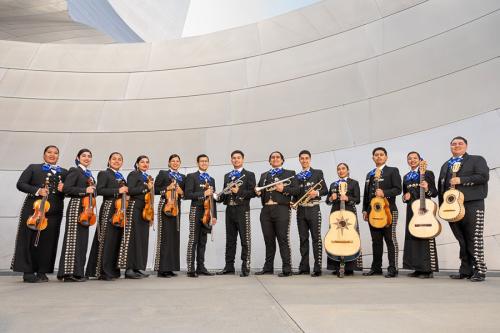
Photo by Frank Andrade
Mariachi Tesoro de San Fernando
“Besides learning about music, I learn about my own heritage through music.”
—Natalia Diaz, violin studentMariachi Tesoro de San Fernando is the performance ensemble of the Mariachi Master Apprenticeship Program (MMAP) based in Los Angeles County. Created in 2001 in collaboration with the late Nati Cano (founder of Mariachi Los Camperos, Smithsonian Folkways recording artists), MMAP has helped develop many generations of mariachi musicians in Southern California by pairing master musicians with community members and youth. This program strives to teach music, the traditional mariachi repertoire, and Mexican American cultural contexts and ways of being.
At the Festival, Mariachi Tesoro, joined by their instructors, performed concerts, shared their learning experience, provided workshops in music and dance, and participated in jam sessions.
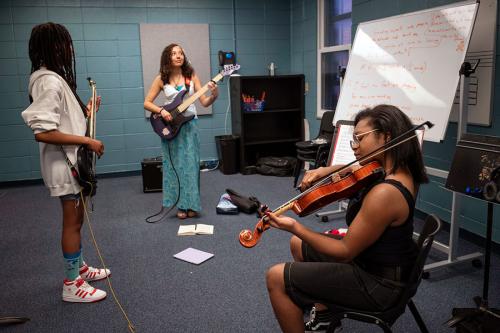
Photo courtesy of Rebel Song Academy
Rebel Song Academy
“When kids feel like they have a voice and they feel empowered and encouraged to use it, then I think you get a better community member in general.”
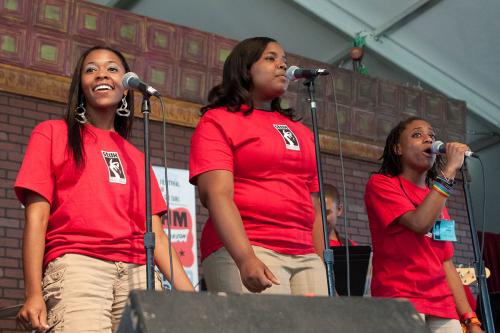
—Enrique Chi, artistic directorRebel Song Academy is an innovative music camp, a program of the Arts as Mentorship nonprofit. Founder Enrique Chi believes that arts-music mentorship can be a space of healing and social change. Since it started in 2017, the academy has built a network of professional, award-winning musicians who mentor its students. Their curriculum guides participants through their own personal artistic process, building life and career skills as they collaborate through music writing, recording, producing, and promoting. Through Rebel Song Academy, mentees produce music from their own experiences and find their voices within their own heritage.
At the Festival, participants from Rebel Song Academy performed several concerts, conducted “popcorn” songwriting workshops, and managed the Festival’s New Sounds Lab, where participants and visitors were invited to record their music.
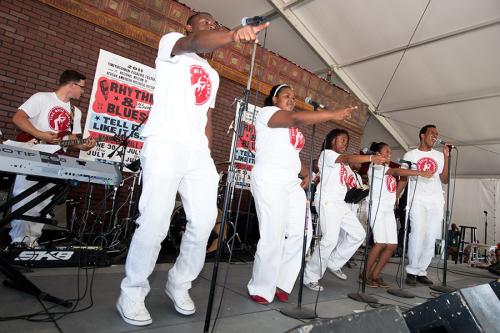
Photo by Walter Larrimore, Ralph Rinzler Folklife Archives
Stax Music Academy
“Stax provided my child with confidence that she did not have with using her talent before. She also learned valuable life lessons.”
—ParentThe mission of Stax Music Academy is to inspire young people and enhance their academic, cognitive, performance, and leadership skills through music, focusing on the rich legacy of Stax Records. Since 2000, the academy has been igniting the professional careers of musicians including MonoNeon, Amber Robinson, and Evvie McKinney. In addition to providing music performance and music theory training in popular genres such as blues, gospel, rock ’n’ roll, and R&B, Stax teaches music history, business, and leadership, ensuring students can produce their own music and create their own musical paths.
Previously, members of Stax Music Academy participated in the 2011 Festival’s Rhythm and Blues program and the 2016 event Freedom Sounds, celebrating the opening of the National Museum of African American History and Culture.
At the Festival, Stax Music Academy students and instructors performed concerts, talked about their musical careers, recorded music in the New Sounds Lab, and offered workshops for visitors.
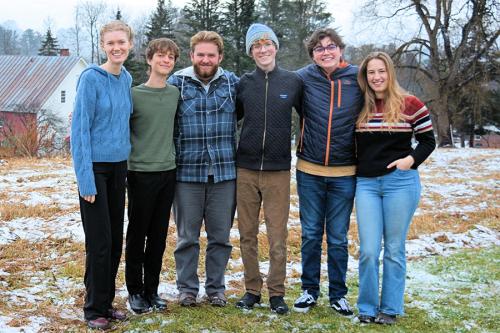
Photo courtesy of Vermont Folklife
Sugar in the Pan
“A fun thing that we have as young trad musicians is the ability to connect styles and be creative with our genre bending, while still hopefully trying to stay true to the tradition.”
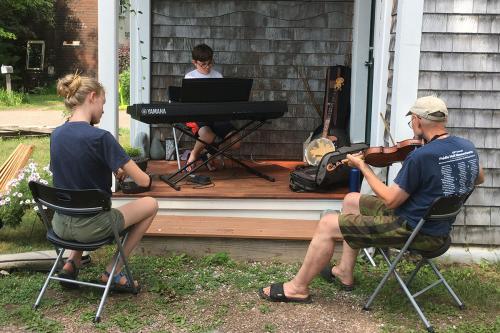
—Emmett StowellSugar in the Pan is a six-piece band that grew out of the Young Tradition Vermont Touring Group run by Vermont Folklife, an education and cultural research nonprofit that works to document, nurture, and present community-based expressions including traditional music genres. The young band members see their traditional music repertoire—bluegrass, old-time, Scottish and Irish music, and others developed through oral tradition—as something that is not fixed. Rather, it is a conversation between the present and the past and an opportunity to help build community.
At the Festival, Sugar in the Pan had daily performances, jam sessions, and fiddle, banjo, and contradance workshops.